
His Robot Girlfriend: Chapter 1 Part 1

Chapter One
Mike’s life was crap. And every day he got up out of bed and thought about how it was crap. Today he climbed out of bed and made his way through the discarded clothing on the floor of the bedroom to the bathroom. His worn image looked out of the mirror at him. He picked up his cordless razor and turned it on before remembering that it was Saturday. He stuck out his tongue at his reflection. Slipping off his underwear, he tossed it at the hamper just outside the bathroom door. It landed on the floor. Turning on the shower, he stepped inside the glass-doored stall, and stood beneath the spray. He took a deep breath and then began soaping up and rinsing off. Pouring a handful of shampoo, he scrubbed his scalp, rinsed, and then turned off the water. He waited about two minutes– partly to drip dry and partly because he didn’t want to face the day– before he climbed out of the shower stall.
Once he was dry, he walked back into the bedroom, crossed to the dresser, and pulled out a clean pair of underwear. The underwear was so old that it looked more grey than the white that it had been, and the material had worn through enough that the elastic showed in the waistband. He slipped his left foot in the leg hole and then the right, getting his big toe caught for just a second. Pleased with himself that he had not lost his balance, he went back to the bathroom and combed his thinning and graying hair. It had been graying for a long time. It had only been thinning, at least noticeably for a few of years– just since Tiffany had died. He brushed his teeth, and grinned at the man in the mirror. It wasn’t a friendly grin. Back in the bedroom, he slipped on cut-off jeans and a green t-shirt. Then he walked through the bedroom door, down the stairs, through the living room, and into the family room.
He touched the screen of the vueTee hanging just above the fireplace to turn it on, then passed through the archway and into the kitchen. Pouring a bowl of cereal, he sniffed the milk before adding it. It was still good. Grabbing a spoon, he headed for the worn recliner which faced the vueTee. The screen was on, but it wasn’t alive with movement and sound. It still had the browser up and it was still on the Daffodil site. Mike had followed the link the night before from the very slick commercial he had seen during the Tonight Show. On the left side of the screen was a large yellow daffodil and on the right were four large yellow buttons, arranged vertically. The first said Barone, the second Amonte, the third Nonne, and the fourth PWX.
Daffodil wasn’t the largest manufacturer of robots, but it certainly had the most cultural cache. Their commercials were by far the best. Everyone seemed to be talking about them. Mike could hum their jingle right now. The four buttons corresponded to the four basic robot units that Daffodil produced. Though there was some crossover between the four types based on the many options that were chosen, the Barone was usually an aid to adults—a robot maid, gardener, or grandparent. The Nonne was a babysitter type: a tutor, a nanny, or again, depending upon the options, a maid. The PWX was an industry grade robot designed for use by corporations and government organizations as a receptionist or a clerk. Finally the Amonte was a personal companion. It could be configured as an escort, a friend, or a lover. As the commercial said, it was “anything and everything you want it to be”.
Mike leaned back in the chair and pointed the remote at the vueTee. He moved the curser over the Amonte button and pressed. The body frame options screen came up, but there was a small window along the left side that said “narrow your selections”. You could narrow them by price. You could narrow them by race-ethnicity. Or you could narrow them by gender. Mike ignored that side of the screen and looked at the body build. If you were going to dream, you might as well dream unencumbered. Dials allowed one to set height, chest, waist, and hips. He had already filled in these features the previous night. After that, one flipped through a series of screens where prospective customers could change almost every aspect of their robot. The head controls gave one control over the shape and placement of eyes, nose, lips, and ears, but also let one choose the forehead shape and jaw line, the hair color and style, the type of chin, and the placement of freckles. Other controls set every detail from fingernails to nipples. Mike flipped through them. The last screen showed the price for his particular build: $2699.00. That would just about wipe out his PayNETime account.
Mike let his curser drop down to the search bar. He moved through the postings about Daffodil. There were many from people questioning certain aspects of the design, but few from people who had actually purchased one. Daffodil didn’t disclose their sales figures to the public, but experts estimated that they had thus far sold only about 300,000 units. There were a few messages from owners of the Gizmo robot, who went on about how superior it was, because you set its personality before purchase. There was only one posting that Mike hadn’t seen. He clicked on it and an aging woman with orange hair appeared on the screen.
“I love my Daffodil. He does everything for me—takes care of the bills, fixes my meals. He drives me to visit my friends, and he rubs my feet every night. His name is Andre. I just don’t know what I’d do without him.”
“Probably move to Florida,” said Mike.
He flipped over to Today Saturday. As he watched Tania Marquez read through the top stories of the day, he thought about purchasing a Daffodil. Twenty seven hundred dollars was a ginormous amount of money to spend. If he had still been married to Tiffany there would be no question. He wouldn’t have bought one. He would still have wanted one, but he wouldn’t have bought one. Oh, Tiffany might have gone for a five hundred dollar model designed just to clean the house, but she certainly never would have let him get the one that he had designed online. Of course if she had still been here… Oh sure, he might have fantasized about a Gizmo Sexbot, but it would have remained just a fantasy. Besides, he didn’t want a Daffodil for sex—well, not just for sex. If he was going to get one, it would be for companionship. It would do all the things that it was capable of doing.
The rest of the morning, Mike watched the vueTee. After Today Saturday was over, he turned to the Cooking Channel and watched Café Italiano, Breakfast at Bloomberg’s, and America’s Test Kitchen. When Noon Buffet came on, he turned off the vueTee and picked up his texTee. The New York Times had already downloaded, so he flipped through the pages. Most of it was politics. Mike didn’t hate politics, like everyone else he knew seemed to. It was just that there didn’t seem much point to it at the moment. All three major parties had chosen their candidates even though none of them had yet had their convention, and it was more than six months till the general election.
The paper bored him after a few minutes, so he clicked through the book menu. He had the first chapter of The Janissary Tree, so he read it. When he was done, he still wasn’t sure if he wanted to spend $17.99 for it. He flipped over to Moby Dick. He had the whole book. Before this year, he hadn’t read it since college and wanted to read it through again, annotating it along the way—just because. It was slow going. Here it was April, and he was only on Chapter 24: A Bosom Friend. He tossed the texTee onto the floor beside the chair.
Though he wasn’t really hungry, Mike decided that it was lunch time, mostly out of boredom. He went to the foyer, where his tennis shoes sat on the ceramic tile. Slipping them on, he grabbed his keys and wallet from the small shelf on the wall and headed out the front door. Climbing into the car, he drove down the block and around the corner. He thought about stopping at Hot Dog Paradise, but there was a long line of cars in the drive-thru, so he went to McDonalds. The girl at the window could have been mistaken for a real person at first, but just like in every other fast food drive-thru window, she was a robot. She was probably a Gizmo Servbot, though McDonalds had their own custom build that wasn’t quite like anywhere else.
“I’ll have a McMeatloaf sandwich,” he said.
“Would you like that ala carte or with an Arch Value Meal?” She had that slightly tinny voice.
“Value meal.”
“Would you care for fries, side salad, fruit slices, or yogurt sticks?”
“Fries.”
“And what would you like to drink?”
“Diet Pepsi.”
“Your total comes to $17.96.”
Mike swiped his cash card through the slot just below the window.
“Thank you for choosing McDonalds. Please pull forward.”
At the next window a girl, a real girl this time, handed Mike his drink and then the bag with his McMeatloaf sandwich and fries. He drove back home and returned to his recliner to eat.
The vueTee had automatically turned off in his absence, so he turned it back on. He watched Face the Nation as ate. Catherine Garvey was interviewing all three presidential candidates—one at a time. The Republicans had nominated another old man. The Democrats had nominated another old lady. It was the same old thing. Barlow said lower taxes. Wakovia said balance the budget. Only the Greens seemed to have picked anyone who wasn’t a cookie-cutter image. Mendoza was young, attractive, and idealistic, and probably didn’t have a chance in hell of getting elected because she had inherited all the problems of President Busby. As long as there were troops in Antarctica, nobody was going to vote Green.
When he was done eating, Mike looked around. He really needed to clean up the house he decided. He would get up and clean for a half hour. He could manage a half hour. By the time he had emptied and then refilled the dishwasher and emptied the trash compacter though, he didn’t feel like continuing, even though only fourteen minutes had passed. He sat back down watched more vueTee, dozing off after a while and waking up just in time for Deal of the Century. Then came Rat Race and then Pajama Party. He opened a can of soup for dinner and went to bed after Saturday Night Live.
Mike woke up just after five with a splitting headache. The bed was cold, not surprising considering he had left both the oscillating fan and the auxiliary air conditioner on. He got up and turned one off then walked downstairs to the family room to turn off the other. Stopping for a moment, he reached up and touched the vueTee screen, turning it on. An infomercial for the all-in-one electronic device charger blared to life, but he sat down and grabbed the remote, thumbing back to the browser and examining the Daffodil page once more. With a sudden sense of purpose he zipped through the custom design pages, changing most of the settings that had been there since he had first looked it over. He didn’t know why he made most of the changes that he did. It was as if something unseen and unknown inside him compelled him to do it. With a slightly hesitant hand, he pressed the “Buy Now” button. $2749.00. Then he went back to bed.
It was more than five weeks later, May 31st, when the package arrived. In the interim, life had gone on much as it had for the past several years. Each weekday, Mike tried to teach World Geography to the dullards that passed for eighth grade students in Midland Middle School, after which he came home and vegetated the evening away. On the weekends, he skipped the first part, and simply vegetated. One night, the Saturday before last, he had dinner with Harriet and Jack. Every day he looked forward to the change that was coming. Even if the Daffodil never lived up to the hype, even if it was just an overpriced Gizmo Maidbot, it would be an improvement. It would pick up the laundry that had covered the floor for a month now, vacuum the carpet that hadn’t been vacuumed in two months, clean the bathrooms that hadn’t been cleaned since Tiffany’s funeral, and maybe dust the things that hadn’t been dusted… well, ever.
Mike was annoyed that the box was just sitting on the step when he got home. Something that expensive, he should have had to sign for. Somebody could have just carried it off. But they hadn’t. It was here. The box looked impossibly small—only about thirty inches on each side. It was silver with a large yellow daffodil only partially obscured by the shipping label. Unlocking and then opening the front door, he picked up the box and brought it inside. It was heavy but not too heavy to lift. He set it down first in the foyer, but once he had shut and locked the front door, he carried it into the center of the living room floor. He went to the kitchen and returned with a chef knife. Carefully sliding the blade through the packing tape, he cut along each edge and then across the top seam.
Folding back the two flaps of the box lid, Mike looked down to find it filled with packing peanuts. Brushing some of them out of the way, he almost immediately found a patch of smooth white skin. It was remarkably real looking—pearlescent on the surface and kind of peachy pink beneath, but not a single blemish or mole or hair upon it. Mike brushed more packing peanuts out onto the floor and uncovered more skin, and then plastic with black hair inside. Finally, setting the knife on the coffee table, he tipped the box over, dumping the contents into the center of the floor. White packing went everywhere. The Daffodil rolled out and came to rest on its side, facing away from him. It was curled up tightly into a ball.
At first, Mike thought he must have ordered the wrong robot. Curled up as it was, it looked like a child. He just stared at it for a moment; at its naked back and buttocks and its black hair wrapped up in plastic. Finally he kicked around through the packing peanuts. There didn’t seem to be a manual—just a single sheet of paper marked “Quick Setup”. He picked it up and looked at it. There were two pictures and no words. The first picture showed line drawing of the back of a human-looking neck, except that the neck had three round holes in it and below them a button. The second picture showed the button being pushed by a line-drawn finger. Next to the button and the finger were the numerals 1, 2, 3. Bending down, Mike lifted up the plastic wrapped hair and examined the Daffodil’s neck. There were the three holes and there was the button. He pressed it and counted aloud “one, two, three”. Then he let go.

Suspiciously Blocked Site

I was searching for a few education sites on the web this week when I found a site that was blocked. This particular site was “Science Misconceptions in the Classroom”. It showcased, so the description said, errors in the science curriculum that can be found being taught in schools today. I though this might be a valuable resource, but as I say, it was blocked by our web watchdog software. Now, we have many sites blocked for many reasons and usually the reason is plastered across the screen: Porn, Social Networking, Anonymizer Utilities, Chat, Criminal Activities, Gambling, Violence, Hacking, Historical Revision, Illegal Software, Nudity, Malicious Sites, Marketing, Media Sharing, Mobile Phones, Peer to Peer, Personal Pages, Phishing, Ideology, School Cheating, Violence, Weapons, and an outrageously long list of other categories. This site doesn’t list one though. It just says it has specifically been blocked by the school district. Hmmm.

Princess of Amathar: Chapter 2 Excerpt

As if on cue, we were suddenly darkened by the shade of a large cloud above us. Moments later it began to hail. We held our furs above our heads to shield us, and quickly scrambled around looking for a cave or an overhang in which to hide ourselves. I found a large overhanging cliff and called Malagor over. We sat down under it and built a fire from some scrub brush.

“I will cook the meat of our last kill,” said Malagor. “You can unpack our furs and tools. This little overhang will make a good place for our base camp. When the hail stops, I will hunt for more meat, and you may pick some berries.”

“You won’t need any help hunting?” I asked.

“I have watched you, and have decided that you are not a very good hunter,” he said. “Perhaps it is because your nose is too small.”

“What does my nose have to do with hunting?”

“You cannot smell when an animal is ready to become dinner.”

I laughed. “I must admit that before I met you I’d never hunted at all, and certainly not with a spear or a bow. I don’t have the benefit of having hunted all my life as you have.”

“I have not hunted all my life,” he said. “When I had a home, I traded for my food.”

“Tell me about your home,” I said, but he only mumbled that he had to go hunting, and picking up his weapons, he left, even though he had not yet cooked our meal, and the hail had not completely stopped.

I watched him head across the plain toward the roaming, grazing herds that wandered there. He was a strange and lonely figure. I sat down to unpack the rolls of furs that were our bedding, and tossed a few damp twigs on the fire. Then I began to look around the small overhang that was to be our home for who knew how long.

The area beneath the cliff was about forty feet wide and fifteen feet deep. The ground was bare of the tall golden grass that reached from the plain, right up to the edge of the sheltered overhang. The area was completely clear of fallen debris, with the exception of a pile of small boulders at one end. I walked over, knelt down, and examined the stones. There seemed to be no place above from which they could have fallen. It looked as if someone had piled them there. I looked between them and saw only darkness. Using my newfound strength, I began moving the stones away from their resting place, setting them to the front of the overhang to serve as a wind break. In no time I had moved them all, building a suitable wind break as well as exposing a small tunnel leading back into the hillside.

I knelt down to look into the tunnel. Then I heard a noise behind me and turned to see that Malagor had returned, with the carcass of a small antelope-type animal slung over his ever-crouching shoulders.

“What have you found here, my friend?” He asked, setting down his burden.

“It is some kind of tunnel. It looks like it was dug by intelligent beings. At least it was hidden by intelligent beings with those boulders. They seem to have been placed here deliberately.”

He laughed, and for a moment I did not understand why. Then he said. “You moved those boulders all by yourself?”

“With powers and abilities far beyond those of mortal men,” I smiled. “Shall we go inside?”

“It is your hole,” he said.

I retrieved a burning twig from the fire, and kneeling down, began to crawl into the tiny tunnel. It was a tight fit. When I had made my way completely inside, Malagor followed. The tunnel remained the same for the first fifteen or twenty feet, then it opened into a chamber large enough for me to stand up in. Raising the small torch above my head, I looked around. Even with the light, it took a while for my eyes to adjust to the darkness. It had been a long time since I had been in darkness of any kind. At last though, I began to be able to see around me.

The chamber was roughly round and carved out of the solid rock. I realized now that not only was the tunnel man-made, or shall I say life-form made, but the cave was artificial as well, for there was no evidence of water or any other natural mechanism for creating subterranean caverns. Placed around the room, apparently with great care, were a number of interesting artifacts. There were two rifles the likes of which I have never seen before. They seemed like some kind of laser gun from a science fiction movie. The metal parts were bright silver or chrome, and the stocks were made of some unknown wood and carved into beautiful but unearthly designs. There were several small square devices next to them which might have been batteries or rechargers. Sitting in a small stack, were a half a dozen cans with no labels. They were the only things made of metal in the chamber which showed any sign of rust whatsoever, even though the thick covering of dust made it plain that we were the first to enter here in a long, long time.

Also in the chamber were a number of interesting tools. There was a beautiful hunting knife. It looked similar to one that might be sold in a sporting goods store on earth, but the blade was carved in bizarre, alien designs of unequaled craftsmanship. There was a hammer, saw, screwdriver, and a shovel, all obviously designed to fit into a backpack or utility belt now long returned to the dust of the ages. Sitting in the back of the room were two swords.

The swords were the most incredibly beautiful blades that I had ever seen in my life. For you to appreciate this completely, I must explain that I take a great interest in swords. While I was in the military, I was given cursory training in fighting with a saber. I have always thought it unfortunate that in the twentieth century, such a civilized weapon should be discarded in favor of the assault rifle. I enjoyed sabers and joined a club of military officers and enlisted men who practiced their use and studied them. It was great fun. We went to many museums to see beautiful old swords, and I must say that in our matches staged purely for our own enjoyment, I became quite a good swordsman. So when I say that these were swords more beautiful than any that I have ever seen, you may see that I do not speak without some experience in the subject. There was a long sword and a short sword. They were somewhat similar to the Japanese samurai swords known as the katana and the wahizashi, with gentle sloping blade and two-handed hilt, but unlike the Japanese weapons, these blades had sharp pointed tips. They too, were beautifully carved with unearthly designs, and the hilts were set with large gems, which sparkled in the light of the now fading ember. The sheaths, if ever there existed any, were long rotted away.

“Amatharian swords,” said Malagor, looking over my shoulder. “An Amatharian warrior placed these here, and the other items, planning to return later. An Amatharian warrior would never leave his sword without good reason.” “These have been here a long, long time,” I said, dropping the now short ember.

Jeff Russell’s Starship Dimensions

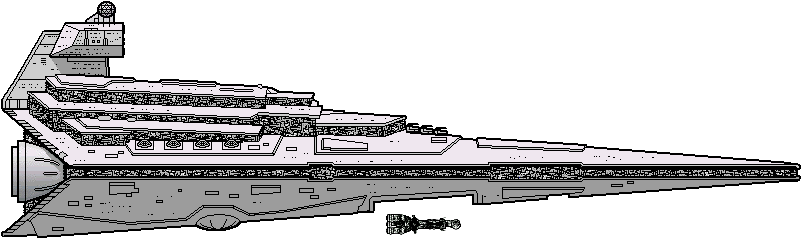
This site has been promoted so much and by so many, that it hardly needs any help from me, but it is way cool. Jeff Russell’s Starhip Dimensions compares the spacecraft from almost every science fiction tv show, movie, anime, and many books as well as a few real-life space ships. If you ever wanted to see which is larger: Star Trek’s Enterprise, the Battlestar Galactica, Farscape’s Moia, or Star Wars’s Star Destroyer, now you can. If you are using IE (or Firefox with the IE Tab add-on) you can drag the images around and set them one atop another. Yes, I know this makes me a big nerd, but I don’t care.

Attendance

Attendance is one of those areas in schools where technology has left the law and common sense behind. According to Nevada state law, the official record of attendance is the teacher’s roll book. It has been years however since teachers have used a roll book. Attendance is done by computer and it is recorded at the district office. At my school district, teachers don’t even have the ability to print a hard copy of attendance in their rooms. Consequently the school district sends us a copy at the end of each month. This leads to the ridiculous result of having the “OFFICIAL” attendance record being just a printed copy of the school district’s computer records.

Princess of Amathar: Chapter 1 Excerpt


I don’t expect you to believe this story, but it is the truth. My name is Alexander Ashton. I was born in the heart of the American west. I have often been known to say that I was born either a hundred years too late, or perhaps a hundred years too early. It always seemed to me that I had the misfortune to live in the single most unexciting period of time the panorama of history had to offer. I don’t say that I longed to be transported to another time or to another world, for never in my wildest dreams did I believe this to be possible. I was destined to be surprised.

I was born in a small city. I played as a child in a park that was once a dusty street where outlaws of the old west fought famous gunfights. When I was seven, my parents were killed in a motor vehicle accident. I really remember little of them. I was put in a state run children’s home where I lived until I was eighteen, passed by time after time by prospective adoptive parents primarily because I was too old. I hold no ill feelings about it now. If there is one thing I learned while I was a ward of the state, it is that no matter how bad off one may be, there is always some one worse off than you are.

After graduating high school and being set on my own by the state, I entered college at the local university. I became a voracious reader and excelled in athletics, but did poorly in my required studies. After two semesters of academic probation I was asked to leave. I walked down the street to the Army Recruiter’s office and enlisted. There wasn’t much to the army, since there was no war on at the time. While I was there, I did learn to shoot, and fight with a saber, and to keep in good physical condition, but otherwise I left the service just as I had gone in.

After finding a new apartment in my old home town, I happened to run into a fellow whom I knew from college. He was running a small grocery store, and doing quite well, since no large grocery chain was interested in such a small market area. He offered me a job, I took it, and we became pretty close friends.

My friend, the grocery store owner, was engaged to a nice girl, and they decided in time to get married. I was chosen to be the best man. The wedding was nice, and the reception was even better. I have never been much of a drinking man, but that night I made a name for myself in that capacity. I don’t know why I drank so much. Maybe I was feeling sorry for myself and my lot in life, I don’t know. I do know that in short order, I had worked myself into a staggering, slobbering, half-conscious stupor. How, when, and where I became unconscious, I cannot say, but at some point I did. And this is where my story truly begins.

I awoke with a chill in my bones. I was lying down in a small stream bed with icy water running over my feet. I tried to rise, but couldn’t. My body was stiff and weak and its only response was to shiver uncontrollably. Around me was a thick forest, and I could see dark shapes moving around in the trees. I sensed then, on some deeper level, that I was in a place I had never been before. Then I heard a deep growling as I passed once again into unconsciousness.

When next I awoke I looked around to find myself in a small shack. I was lying on a cot made of animal furs, and I was bathed in a cold sweat. The walls of the small shelter were made from cut logs and a roughly fashioned wooden chair was the room’s only furnishing. When the door of the shack opened, I truly believed for the first time in my life that there were life forms other than those I was familiar with on earth.

The creature that stepped inside the door, and closed it after him, was most ugly. That he was intelligent was demonstrated not only by the fact that he had opened and then closed the door, but also by the fact that he wore clothing– ugly clothing yes, but clothing nonetheless. He was about five feet tall and stood in a kind of perpetual crouch. His body was covered with coarse brown hair, two to three inches long, from his head to his feet, which reminded me of the feet of a dog or a wolf, although larger. He was somewhat wolf-like in every aspect, such as his protruding snout, but he also seemed somewhat baboon-like in his expressive eyes. I am comparing him to earthly animals, but this is really inadequate, as the similarities were actually quite superficial, and he was totally unearthly in appearance. I remember most looking at his hands. He had four fingers not too different from my own, but his abbreviated thumb possessed a great, long, curving claw.

The creature, stepping slowly over to me, reached out a hand and gave me a piece of dried fruit. I found myself quite hungry and the fruit quite good. As I began to eat, the being began to bark and growl at me. At first I thought he was angry, but then I realized that he was trying to communicate in his language. I was too tired to respond and fruit still in hand, passed back into sleep. When I woke again the creature was sitting in the chair looking at me with his head cocked to one side. I pushed myself up on one elbow and he spoke to me again, this time in a more human sort of language. It seemed almost like French, but having learned a few phrases of that language in the army, I knew that it was not. This language was so much less nasal. He pointed to his chest and said “Malagor” then he pointed to me. I said “Alexander”. He smiled wide exposing a magnificent row of long, sharp teeth. My language lessons had begun.

No Child Left Behind


The No Child Left Behind Act of 2001 plays a big part in my life and in the lives of teachers around the country. So what is it? There is a very good page that covers is quite well on Wikipedia here.

Here is a brief description of the law from that article.

NCLB is the latest federal legislation (another was Goals 2000) which enacts the theories of standards-based education reform, formerly known as outcome-based education, which is based on the belief that setting high expectations and establishing measurable goals can improve individual outcomes in education.

In other words, No Child Left Behind provides for testing students, in the hopes that this will make them achieve more and hopefully learn more. This is the same philosophy that imagines that if you simply step on the scales every day, you will lose weight.

The other big part of NCLB, is the increasing levels of expected performance. In order to meet NCLB a school must show that 50% of its students are proficient in Math and Language Arts. Then the next year, students must be 60% proficient. And the levels increase each year until at some point schools are to have all students testing proficiency. This moving target is called AYP, or Adequate Yearly Progress. If I had a dollar for every time I heard someone say AYP, I could retire and hire a private tutor for each of my 165 students.

Prehistoric Mammals

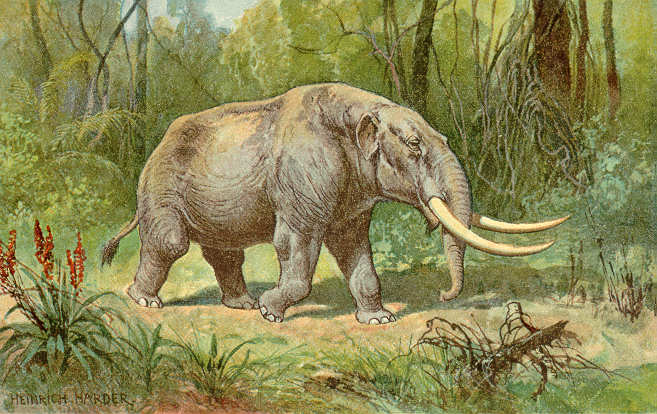
Most kids love dinosaurs. I don’t know why. People who are much smarter than me have suggested it is because they are big and powerful. When I was a kid I was certainly no exception. I loved dinosaurs. I also loved the prehistoric animals that came before and after the dinosaurs, like the prehistoric mammals of the pleistocene. I think the mammels get short shrift. Most of them are at least as interesting as the dinosaurs. Of course many people already think that they are dinosaurs, as evidenced by the inclusion of mammoths and saber-tooths in bags of plastic dinosaurs and dinosaur-shaped chicken nuggets. Of course some of the greatest documentaries about any prehistoric animals are the Walking with Dinosaurs series, including Walking with Prehistoric Beasts (mammals) and Walking with Monsters (pre-dinosaur creatures), but I remember another show from my youth. It was called What’s New and was on PBS. If anyone has any information on that show, let me know.

Blog Formatting

If you’ve read the chapter excerpts that I’ve posted the past few days, you know I’ve been having some formatting problems. Does anyone know if there is a way to indent? I’ve tried spacing in, and it looks fine until I save it, then the spaces disappear. Help!

The Steel Dragon: Chapter 1 Excerpt


Chapter One Excerpt

Past the Great Church of the Holy Savior, bounded on the south by Avenue Hart, the north by the railroad yards, the west by Contico Boulevard and on the east by what Senta didn’t know, was one of the city’s seemingly never-ending masses of tenement buildings. Here were countless brown-stones, put up quickly and cheaply, with none of the artistic style, careful engineering, or safety considerations taken into account when the buildings of the Old City had been built centuries before. The shortest among them were seven or eight stories high, but most were at least fifteen. The highest among them, reached up into the sky more than twenty stories. Senta, still skipping despite the hour and a half long journey from the park, reached the entrance of her own building and skipped up the eight steps to the front door. From that point on, skipping was out of the question. Even a child with as much energy at her disposal as had Senta, was worn out by the time she reached the twelfth story. And the twelfth story was where Senta lived with her Granny.
She turned the doorknob as she leaned against the door, and burst into Granny’s apartment. Senta had always thought of it as Granny’s apartment, rather than her own. She was only one of the children who lived there. There were six. Bertice, who was a pretty and very quiet seventeen year old, worked fourteen hours a day sewing in the shirtwaist factory. Geert, a surprisingly husky boy of twelve, traveled each day to the King’s warehouse, where the government gave away bushels of apples. Then he took the apples to the train station to sell them for a pfennig a piece. Senta herself, at nine, fell next in line. Then was Maro, Geert’s eight year old brother, who worked in a printers’ shop. He had lost the two endmost fingers on his right hand playing too near the printing press. Didrika was a cute and precocious four year old. She and her baby sister, Ernst, were Granny’s only real grandchildren, Bertice being the granddaughter of Granny’s younger sister and Senta being the granddaughter of Granny’s older sister. Senta wasn’t too sure what the exact relationship was for Maro and Geert, but everyone in the house was somehow related and everyone in the house was treated as though they were a cherished grandchild by the hunch-backed, grey-haired old woman who looked up from her washing when Senta entered.
The front door opened into the combination living room/kitchen. An old table and two chairs sat next to the coal-fire stove and just to the left of that was a large, two-basin sink with running water. This was used for washing clothing, washing dishes, and washing children. On the other side of the room, a ragged sofa sat next to a mismatched chair. At night, the room was used as a bedroom by Geert, who slept on a sheepskin, which was pulled out from under the sofa and rolled out onto the floor; and by Maro, who pushed the two chairs away from the table, and placing them side by side, spent the night lying across them.
In addition to this room, there was one other in the apartment—a bedroom. The double bed that had come with the apartment was shared by Granny and Bertice and Didrika, who was small enough to curl up between them. Ernst had her own baby crib, which had arrived when she and Didrika had, two years before. Senta didn’t know what had happened to the two girls’ parents, any more than she knew what had happened to her own, but they were dead now. Senta had her own special bed which had been made by setting side by side three wooden crates, two which had originally held Geert’s apples, and one a carrot crate, given by an old man who with his little donkey, delivered carrots to the many eating establishments in and around the great plaza. Then the three crates were covered with a hand-stuffed mattress.
Granny had a bucket in the bottom of the right hand sink. The bucket was filled with soapy water and dirty clothes. The old woman picked up from beside the sink, the washer, a device which looked like a large brass plunger attached to a broomstick, and placing it in the bucket on top of the clothes, began to plunge it up and down while turning it. This was a lot of work, but nowhere near as much as cleaning clothes with a washboard, and it was much easier on the clothes too.
“Payday,” said Senta, giving Granny a hug, and then handing over the fourteen copper pfennigs she had earned for the week.
“Thank you, dear,” said Granny, pausing from the washing to accept the money. She then handed two pfennigs back and said. “Keep one for yourself and put one in the meter. The gas went out this morning, and we’re going to need some light tonight. Maro will want to read to us, and I have to catch up on my knitting.”
High on the wall, above the coal fire stove was the gas meter. It was a square device about two feet across which controlled the flow of gas from the pipes in the wall to the two gas lamps on the ceiling. It had a coin slot and a knob on it. When a pfennig was placed in the slot and the knob was turned, the appropriate amount of gas would be allowed to flow out to be used by the family for evening light. It usually lasted about two and a half evenings, so the family, most weeks budgeting two pfennigs for artificial light, had five evenings lit by gas. The other two evenings were either lit by a single candle, or kept dark. Senta pressed the less shiny of the two pfennigs in her hand into the slot and turned the knob. She could hear the little copper coin fall down a pipe, making a little echo as it went down into the wall. A second later, she could hear hissing of the gas making its way from the meter toward the lamps. It hissed only a moment then stopped. They wouldn’t light the lamps until after dark. Waste not, want not.
“Would you like me to go get the coal for the stove, Granny?” asked Senta.
The coal supply was located in the basement—the lowest level of two basements. This meant walking down fourteen flights of stairs, and walking back fourteen flights of stairs with a bucket full of coal.
“Getting the coal is not a job for a little girl,” said Granny.
“I can do it.” “Oh, I know you can. But Geert is already getting it.”
“How come he’s home so early?”
“Oh, he had a very good day today. He sold all of his apples so quickly this morning that he was able to go get a second bushel just for us. I’m going to make a pie this evening.”
At that moment, Geert entered with a bucket full of coal. He grunted at Senta and walking over to the cast iron stove, opened the small door at its very bottom and shoveled in about a third of the bucket. He then took a sheet of newspaper from the stack nearby and wadded it up. He struck a wooden match and lit the paper, tossing it in after the coal.
An hour later, the room was warm with the heat of the oven, Ernst woke up from her afternoon nap, Didrika returned from playing with her friend on the eleventh floor, and Senta helped Granny make an apple pie. By the time the apple pie was cooked, Maro had returned from his job at the print shop and had plopped down on the sofa, while Granny and Senta peeled potatoes. Dinner was ready when Bertice arrived home, completely exhausted, curling up in the mismatched chair, able to stay awake just long enough to eat her potato soup and apple pie.
The rest of the evening was spent together in the living room/kitchen. Bertice was quietly snoring, Granny was knitting, and the rest of the children were listening to Maro read, by the light of the gas lamps, from the broadsheet he had brought home with him from work. Senta didn’t know it, but the broadsheet was just one of the many propaganda-based papers which were distributed around the city each day—some pro-government and some supporting various opposition groups. The main story in this one was about how the government was gathering all of the wizards in the kingdom and making them spend their time creating enchantments and weapons for use in a possible war with the kingdom’s hereditary enemies Freedonia and Mirsanna. This, according to the broadsheet, left no wizards to cast the spells needed by average citizens: to protect homes, to increase the crop yields of farms, and to create enchanted vehicles. Not to mention, thought Senta, to tell fortunes and create beauty or love or happiness potions. There were also local news stories—a fire had burned down a candle shop, someone had stolen a brand new steam carriage in broad daylight, and another young woman was murdered near the waterfront. Afterwards, someone nudged Bertice awake long enough for her to change into her nightgown. Everyone else changed into their own nightclothes, and they all went to bed.
Senta didn’t know what woke her up in the middle of the night, but she was awakened. Moonlight streamed in the tiny window of the bedroom. She lay on her bed, made of three crates and a hand-stuffed mattress for a long time, listening to Bertice quietly snore, and Ernst breathe. She couldn’t hear Didrika for a while, but then she heard the six year old quietly whimper as she sometimes did when she was cold. Senta thought that the blanket must have come off of her. Quietly getting up, she tip-toed over to the bed, and found that sure enough, Didrika’s knitted baby blanket had slipped down to her knees. Leaning over Granny’s form, she pulled the blanket back up to the girl’s shoulders and tucked her in. As she leaned back, Senta looked at Granny’s face. Granny’s eyes were open.
“Granny?” said Senta.
Granny didn’t answer. Senta put her hand near the old woman’s nose and mouth. No breath came from either. She then put her hand on Granny’s cheek. It was smooth and soft, but it was cold. She made the sign of the cross for the second time that day. Senta was young, but she was not naïve. No child living in the masses of brownstone tenement apartments in the great city of Brech could afford to be naïve. Life was hard. Life was unsympathetic. Life was a trial. But Granny no longer needed to worry about the trial of life. Granny was dead.