Monthly Archives: February 2009
Books Everyone Should Read – Part 2

Bleak House is one of my favorite Dickens novels. It’s full of suspense, tragedy, irony, and whimsy, not necessarily in that order. While you can always say you’ve read a Dickens book even though you haven’t– you really should read at least one, you big fat liar. Click here and get this book in a variety of eBook formats for Free. This link leads to feedbooks, but you can also find it at Manybooks.org and other distributors of public domain literature. Read it. You’ll be glad you did.
Five Months in the Slush Pile

Well, it’s been five months today since I submitted The Steel Dragon (and prior to my decision to change the title) to Baen Books through their website. Five months is a long time to be waiting on tenterhooks, but according to their site it will be at least nine more months before I hear anything back.
In the meantime, here is the definition of tenterhooks from worldwidewords.org:
It’s been so long since anyone has seen either a tenter, or the hooks on one, that the word and the idea behind it are now quite mysterious, so much so that it sometimes appears as on tenderhooks, which sounds as though it ought to make more sense. But at one time, the phrase on tenterhooks would have evoked an image that was immediately understandable.
It comes from one of the processes of making woollen cloth. After it had been woven, the cloth still contained oil from the fleece, mixed with dirt. It was cleaned in a fulling mill, but then it had to be dried carefully or it would shrink and crease. So the lengths of wet cloth were stretched on wooden frames, and left out in the open for some time. This allowed them to dry and straightened their weave. These frames were the tenters, and the tenter hooks were the metal hooks used to fix the cloth to the frame. At one time, it would have been common in manufacturing areas to see fields full of these frames (older English maps sometimes marked an area as a tenter-field). So it was not a huge leap of the imagination to think of somebody on tenterhooks as being in an state of anxious suspense, stretched like the cloth on the tenter. The tenters have gone, but the meaning has survived.
Tenter comes from the Latin tendere, to stretch, via a French intermediate. The word has been in the language since the fourteenth century, and on tenters soon after became a phrase meaning painful anxiety. The exact phrase on tenterhooks seems first to have been used by Tobias Smollett in Roderick Random in 1748.
God, I love the English language!!!
The Voyage of the Minotaur – Chapter 7 Excerpt
Iolanthe Dechantage, as she had every evening since leaving home on the H.M.S. Minotaur, held a dinner in her cabin. The cabin, which the Captain of the ship had vacated for her use, was quite tiny. It barely had enough room for a bed, a desk and chair. But it had a small private dining room attached, capable of seating eight for dinner. A rotating list of guests arrived each evening to be served Iolanthe’s favorite dishes prepared by Mrs. Colbshallow and served by two of her wait staff—for the room was only large enough to allow two waiters. Tonight’s guest list included Captain Gurrman. The captain was always included, after all it had been his cabin and he was nominally in charge of the ship. On those evenings when he was unable to attend, he sent an alternate. Iolanthe usually invited a second officer. This evening that second officer was Lieutenant Staff. The rest of the guest list included Professor Calliere, one of his assistants Mr. Murty, Father Ian, and Iolanthe’s two brothers Augustus and Terrence.
The meal this evening was roasted chicken with roasted potatoes, boiled broccoli, savory pudding, and thick brown gravy. It was a rather ordinary meal, but the necessities of travel required certain sacrifices. This would in fact be the last of the fresh produce until the ship made its stop at the island nation of Enclep. Iolanthe had seen to it that the colony to be established would have plenty of food. Modern packaging made it possible to supply food for a thousand people for an entire year. Granted, it was processed, canned food, but the colony wouldn’t go hungry. They had also brought huge quantities of seed in order to establish farms and plantations. But fresh vegetables were limited and had to be consumed anyway before they went bad.
“The meal was delicious,” said Father Ian.
Father Ian was a big man in his late fifties. He was six foot two and nearly three hundred pounds. He carried most of his weight in his stomach and chest. One might certainly call him fat, but he was also large in some indefinable way. Men who were taller, and even men who were heavier, were dwarfed when they stood next to Father Ian. He had white hair and a friendly, clean-shaven face, with somewhat rosy cheeks, that stood out above his black clerical robes and his white collar. When one shook hands with him, one couldn’t help but notice his long, but slender fingers and well-manicured nails. They seemed to point to him as an individual unlikely to take off on the great adventure of conquering a new continent and establishing a new colony. On the subject of his devotion, there was no word. Only a few had heard him pray, and none, to Iolanthe’s knowledge, had seen him perform the miracles that marked the truly favored in the Church of Kafira.
“Simply wonderful, Miss Dechantagne” agreed Lieutenant Staff.
A young man about the same age as Iolanthe, Lieutenant Staff was tall and blond, with the freckled face of a man far younger. His white naval dress uniform was starched and perfect, with a row of brass buttons running up the front, a stiff leather collar around the neck, and stiff leather epilates on each shoulder. Iolanthe was quick to notice that he smiled appreciatively whenever his gaze landed upon her.
“If you keep this up, Miss Dechantagne,” said Captain Gurrman. “My officers will be ruined for normal navy food.”
The Captain might have been Lieutenant Staff’s father. Nearing sixty, he still had a boyish face and boyish charm. His white naval dress uniform was a little tight in the middle, but made up for it by being heavily decorated with gold brocade. A thick white beard minimized his heavy jowls, and thick white eyebrows almost hid his green eyes.
“From what I can see Captain, navy food would ruin anyone,” said Professor Calliere.
Everyone paused to see what the Captain would say, but he just chuckled heartily. Iolanthe pursed her lips. Even a sheltered academician should know better than to belittle the navy aboard a battleship. She had spent a great deal of time with the professor just before and now during the journey aboard the Minotaur, and she had to admit that she found his keen intelligence engaging. He wasn’t bad looking either. But the long period of inactivity seemed to have brought out in him a certain looseness of etiquette that simply could not be tolerated.
“It’s been two days, Captain.” Augie suddenly interjected. “What’s the news on the murder investigation?”
Iolanthe looked at her brother and narrowed her aquamarine eyes as she thought about the events of the previous morning. She had stepped into Augie’s apartment on an errand to discuss the supplies to be purchased upon arrival at Enclep, and found him lying naked on his bed. The room had reeked of alcohol. Iolanthe had grabbed the closest thing she could find, which were a pair of Augie’s trousers and beat him about the head and shoulders with them until he fought back.
“Kafira’s cross, Iolanthe!” He had shouted. “What? What do you want?”
“Go get cleaned up and dressed, Augie. I need to talk to you.”
Augie had jumped up and grabbed a pile of clothes, and as Iolanthe still whipped him with his own pair of pants, he had dashed out the hatch and down the hall to the water closet, which on the ship was called ‘the head’. While she had waited for his return, Iolanthe had looked around the tiny room in disgust at the mess. There had been clothes strewn everywhere and open and empty bottles of whiskey on every horizontal surface. Then she had noticed something in the corner. It was a pair of women’s bloomers, and peeking out from under them was something strange.
Iolanthe had bent down and picked up the bloomers, holding them at arm’s length, then retrieved the item of clothing beneath them, and examined it carefully. It was a man’s shirt, and on its front were two handprints, in what appeared to be blood. It was as if a man, his hands drenched, had wiped them on his front. Cognizant of the fact that a murder had been committed the night before, and mindful that Augie had been present at the site of a previous murder in the great city, she had quickly decided that this was a piece of evidence that could not be allowed to be found here. She had rolled up the shirt inside of the bloomers and then exited Augie’s cabin and walked through the hallway to the hatch on deck. Once there, she had quickly determined that she was alone on deck, and then had tossed both items of clothing over the side, watching them until they landed lightly upon the water and then trailed away into the distance. She didn’t believe that Augie could be guilty of murder, so any time spent investigating him would have been a waste, but murderer or not, it was in bad taste to bring it up at dinner.
“I’ve left the investigation in the capable hands of Lieutenant Staff,” said the Captain, and turned to look at his subordinate.
“And the investigation is proceeding with the help of Father Ian and Wizards Labrith and Kesi,” said Staff. “Beyond that, I’d rather say nothing.”
“Yes, quite,” said Terrence.
Iolanthe nodded in agreement. It was obvious to anyone who paid attention that this murder was related to murders, at least three, which had occurred in the great city. It was also obvious that if this fact became known among the passengers, there would be widespread panic and that could not be allowed. Better to keep the entire thing quiet, or if necessary, let on that it was an isolated incident—perhaps a crime of passion.
“Do we know the woman’s name?” asked Mr. Murty, in his unpleasant nasal voice.
“She was a Miss Astley,” said Staff.
*** The Voyage of the Minotaur ***

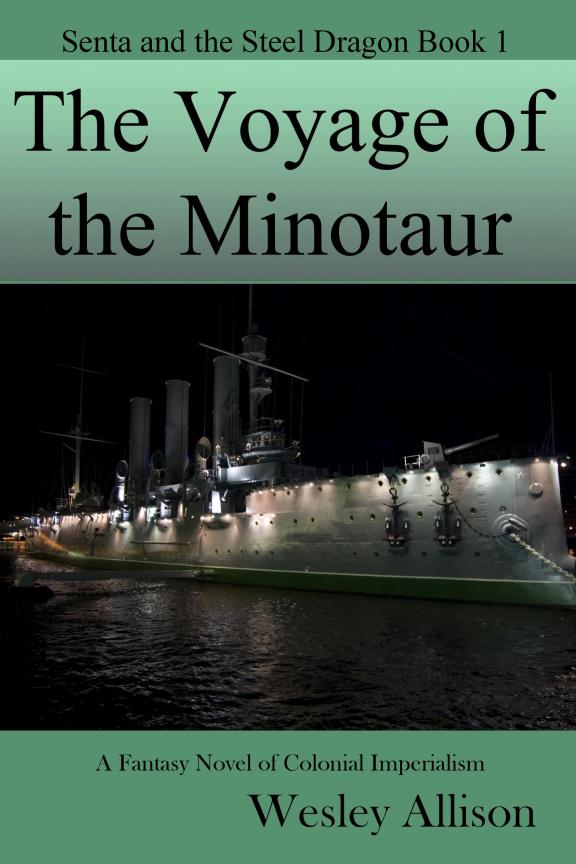
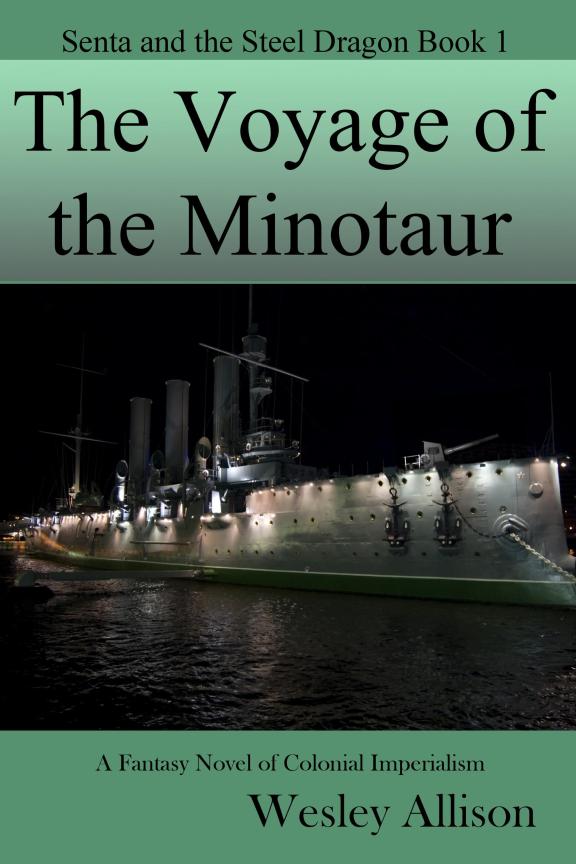
With the decision that “The Steel Dragon” is going to be a series, and that the series is going to be called “Senta and the Steel Dragon”, I needed a name for the first book in the series– the one I was originally calling “The Steel Dragon”. Here it is. “The Voyage of the Minotaur” So those excerpts you’ve been reading from The Steel Dragon have been excerpts from The Voyage of the Minotaur. Look for another one tomorrow.
Robinson Crusoe

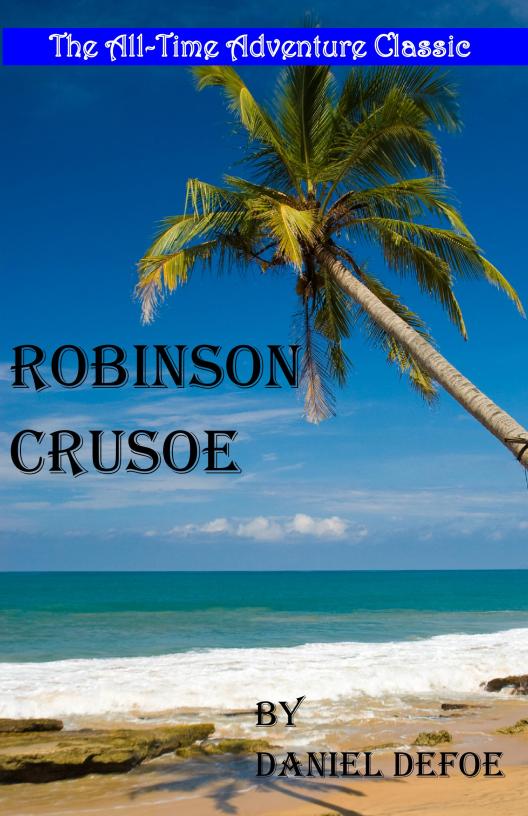
If you take a moment and glance along the right green column, you will see the brand new City of Amathar Press edition of the Daniel Defoe classic Robinson Crusoe. It’s a great book and should be in everyone’s library. Pick up a copy now. $9.95 for a Digest Paperback and $FREE for a pdf download.
And while on the subject, check out the NBC show Sunday at 8:00. It’s really good.