
His Robot Girlfriend – Chapter 3 Part 2

Just as he was finally regaining his feet, Mike saw Patience planting some kind of karate kick to his assailant’s neck. The other thug was leaning against a nearby car. It was obvious from the way he was holding himself that she had already dealt him some heavy blows. She was about to hit the second one again when she saw the blood streaming down Mike’s shirt. With a small squeal she rushed toward him. The two would-be robbers took off between the cars as fast as they could.

“That’s right!” yelled Mike. “Run, you pussies!”

“Mike!” gasped Patience. “You’re bleeding!”

“It’s nothing,” said Mike, his eyes starting to roll up into his head. “But I think I’m going to pass out.”

Mike felt Patience guiding him to the ground, so that he wouldn’t bash his head on the pavement.

“Thanks,” he said, as darkness spread across his world. “That’s my girl.”


* * * * *


“That’s my girl.”

“Yes Daddy, I’m here.”

He opened his eyes and looked up into the concerned face of his daughter Harriet. He was on his back in a hospital room. An I.V. was attached to the back of his right hand. He reached up with his left hand and felt the bandages that covered the left side of his stomach.

“When did you get back?” Mike asked.

“I got home late yesterday,” said Harriet. “Right about the time you decided to take on a couple of desperados. The police said they haven’t caught them yet by the way, though the officer left his card in case you remembered something when you woke up.”

“Call him,” said Mike. “I recognize both of those guys. Carlos Fernandez and Nathan Spencer. They were in my class seven or eight years ago. I think Nathan’s mother still lives down the block from me.”

“Nathan Spencer!” said Harriet, whipping out her phone and stepping toward the door. “I dated his brother! Officer Darling please…”

As Harriet stepped out the door the doctor stepped in to check on Mike. He informed him that he had been operated on the night before– a relatively small amount of damage, all things considering. The knife had only nicked his descending colon. Had Mike not been overweight and possessed of a fairly large amount of belly fat, the knife could easily have caused much more damage, perhaps even death.

“Well at least there is one consolation to being fat,” said Mike.

“On the other hand I’ve seen knife blades turned by a well-toned abdomen,” said the doctor. “And of course there are other benefits to being in good shape.”

“Fine fine,” said Mike.

The doctor left and Harriet returned.

“They’re going to get those little bastards.”

“They weren’t so little,” said Mike. “How did you know I was here, anyway?”

“Your girlfriend called me.”

“Girlfriend?”

“Yes, your girlfriend,” said Harriet. “You do remember her? Patience? Or do you have amnesia.”

“Oh I remember her. I just didn’t realize you knew about her yet.”

“I heard about her yesterday. From my little brother,” assured Harriet. “I was happy to meet her though. I don’t think I’ve ever seen a Daffodil before, let alone talked with one. She’s not like other robots I’ve seen.”

“Does it bother you that I got her?”

“You’re a big boy,” said Harriet. “I trust you to make your own decisions.”

“Good. Your disapproval would have bothered me more than anyone else’s.”

“Come on Dad. I know I wasn’t your favorite.”

“Don’t tell Lucas this,” said Mike. “But I’ve always felt like I had more of a connection with you than with him.”

Harriet looked at him strangely for a moment.

“Where is Patience?” asked Mike.

“I sent her home a couple of hours ago to shower and change. I hope she gets some rest too. She looked really tired.”

“She doesn’t get tired. She’s a robot.”

“Maybe,” conceded Harriet. “But she was by your side almost the whole time you were out.”

Harriet stayed with her father for another hour. Then Mike sent her on her way. He hadn’t actually wanted her there at all. He had always been of the opinion that children, even adult children, should not have to see their father in that kind of weakened, compromised condition. The two other times he was admitted to the hospital, he hadn’t allowed any of the kids to visit him.

Mike was served a lunch of soup and some kind of light purple jell-o. By the time he had eaten he was feeling pretty fit. He flipped on the vueTee and tried to find something good to watch, but nothing interested him. Then he saw that a texTee was sitting on the bedside table. It was a newer model than the one he had at home. He turned it on and flipped through the selection of magazines. Time. Electronic Entertainment. National Geographic. Penthouse. And three comic books: Superman, Wonder Woman, and Batman. It was as if someone had transferred his own subscriptions to the new device. Then when he selected one of the magazines and watched the image fill the screen, he realized that this was just what had happened. Although Harriet could have compiled that selection, she would have died before buying a Penthouse. Patience had done this for him.

Mike had read all of the comics and was flipping through Time when Patience bounded into the room. She was wearing a black camisole top cut just above her perfect belly button and a pair of very low rise jeans, which together created a truly expansive piece of exposed stomach real estate. The pair of five inch sandal pumps, called Rowenas that she had purchased at the mall made her slender figure look seven feet tall.

When she saw that Mike was awake, she leapt to his side, clasped his face in her hands and kissed him deeply. She climbed into the hospital bed with him, and continued kissing him. When she seemed about to give him a hickey on his neck Mike pushed her head away.

“Hold on,” he said. “I’ll be out of here in a few hours and then we can do that at home.”

“The doctor said that you need to spend another night, Mike.”

Mike’s face immediately turned sour.

“I really hate hospitals. Always have.”

“Don’t worry,” Patience said. “I’ll stay here with you.”

“I didn’t say I was worried. I just don’t like hospitals.”

Patience nestled down in the bed next to him and put her head on his chest.

“I was so worried, Mike,” she said. “I thought for a moment that you were going to die. You were so heroic. I love you so much.”

“Oh, come on,” Mike said. “You were the one who kicked the crap out of the bad guys.”

“Self defense is part of my programming. You didn’t have that advantage and you still went after them.”

“Whatever. Tell me everything that happened after I passed out.”

“When you fell, I used my first aid programming to staunch the flow of blood. Then I used my infiNet connection to call the fire department. Paramedics and an ambulance arrived nine minutes later. The police arrived two minutes after that. While you were being loaded into the ambulance, I made sure that all of our purchases were stowed safely in the trunk, and then drove the car to the hospital. Once here I needed to notify your daughter, because the clerks at the hospital would not accept my signature to begin medical treatment. They said they needed a relative to sign admission papers.”

“And you stayed here until Harriet sent you home.”

“Yes.”

“I’m glad you’re back.”

“I’m glad I’m back too.”

They lay together on the hospital bed for some time not speaking. It was not an awkward silence, but rather a pleasant one. Mike finally broke it.

“I’ve only known you for six days but I already feel like I never want to be without you. I never want you to leave.”

“You will never be without me, Mike,” she said. “I will never leave you.”

Patience lay in the bed with Mike for the rest of the afternoon. He had never been so comfortable sharing such a small bed in his life. They both ignored the disapproving looks they received from the nurse each time she came in to check on him.

“I don’t think they’re going to let you stay the night with me,” Mike said. “Can you go home and sleep?”

“I don’t need to sleep but I have plenty that I can do. Then I can come and take you home tomorrow.”

“Good,” said Mike. “Why don’t you go ahead and go now. They are going to start serving dinner in a few minutes anyway.”

“As you wish, Mike.” She climbed out of bed and bent over, kissing him on the cheek before walking briskly out of the room.

Time without Patience went very slowly. Mike ate the soup, toast, and pudding that made up his dinner. He watched Animal Olympics on vueTee, the only thing even remotely interesting. He even took a little nap, though it was hard with the nurses talking right outside his door. Loudly. Without any concern for someone trying to sleep.

The next morning Mike got up and dressed in one of the new outfits that Patience had picked out for him at the mall– a twill jacket and matching pleated pants with a mustard colored tie. Then he had to wait an interminable amount of time to be discharged. If Patience hadn’t arrived when she did, he would have thrown a fit. But with her there nothing seemed to be that bad. At last an orderly arrived with a wheelchair and rolled him out the front door. Once outside, Mike got up and walked to the car. But he let Patience drive him home. As they drove, Mike watched Patience, marveling at her motoring skill. Then he noticed something else.

“You have earrings! I mean you have pierced ears and earrings.”

“That’s right, Mike. I was able to get them done last night at Electronics City.”

He looked carefully at the right ear, the only one visible. Her lobe was pierced twice and there was a small stud at the top of her ear through the cartilage—plastic, he corrected himself.

“I didn’t know you wanted three holes.”

“I have four in the other ear,” said Patience. “I noticed signs of sexual arousal when I approached the subject.”

“In who?”

“You.”

“You did? Well, yes.” Mike cleared his throat and took a scholarly tone. “Ours, like most civilizations, uses pierced ears to signal sexual availability.”

“But I saw little babies with their ears pierced.”

“Yeah, I know. That’s revolting.”

When they reached the house, Patience came around and opened the door for him. Together they went inside. Mike was struck at how perfectly clean the place was. It had been vacuumed, dusted, and he noticed that even the bookcases had been organized according to the Library of Congress system.

“This house looks great,” he said.

“Thank you.” Patience beamed. She led him to the couch and kissed him. They made love right there in the living room, Mike noticing only afterwards that the window glass was set to transparent. He relaxed afterwards and was just beginning to doze off when Patience returned to summon him to dinner in the dining room. She had set the table for one, with a lit candle as the centerpiece. Then she sat down across from him as he ate. She had prepared red pepper halibut and for dessert– cannoli. The dinner was delicious.

“Can I ask you about some of the things I found in Harriet’s old room?” asked Patience.

“Sure.”

“I found approximately four thousand three hundred comic books, and several hundred old paper books.”

“Yes. Those are mostly from my teen years. I was going to try and sell them on eBay, along with the old books I have boxed away in there. They don’t make them anymore, you know. So they should be worth something. But it’s a lot of work.”

“Very good,” she said. “I also found six boxes of pictures and associated memorabilia.”

“That’s all the family souvenirs. Tiffany started making scrapbooks a few years before she died, scanning that stuff in to go along with the pictures on the vueTee. But she only managed to complete a couple. I thought about making some myself, but it just takes so much time. I’m not really into it anyway. Maybe I will just give it all to Harriet.

“Would you mind if I sorted through all of these things, Mike?”

“Of course not. You are my girlfriend after all. Just take good care of the scrapbook stuff.”

“I will take good care of all of it,” said Patience. “Except the old books and comic books, which I will sell for you.”

Mike spent the remainder of the evening with his feet up, in his recliner watching Star Trek: Engineering Corps. He had purchased it a week before but hadn’t had a chance to play it. When he was done he brushed and flossed his teeth. Then Patience changed his bandage for him and tucked him into bed. Then she turned out the lights, and lay down next to him until he had fallen asleep. That was precisely11:02
His Robot Girlfriend

Mike Smith’s life was crap, living all alone, years after his wife had died and his children had grown up and moved away. Then he saw the commercial for the Daffodil. Far more than other robots, the Daffodil could become anything and everything he wanted it to be. Mike’s life is about to change.

His Robot Girlfriend is available at the following locations.

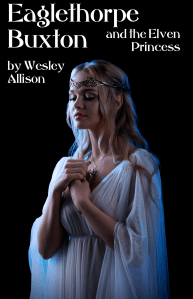
Eaglethorpe Buxton and the Elven Princess – Chapter 16

Chapter Sixteen: Wherein we travel for two days without my companion uttering a single word.

Jholeira curled up in my blanket next to the fire and went to sleep without another word.  I didn’t think this strange, but when she did not deign to speak to me the following morning I began to feel a little put off.  I decided that if she wasn’t going to speak to me, then I wouldn’t speak to her either.  We packed up and left our campsite in complete silence.  By elevenses I was getting rather tired of the quiet.  Over a brief meal of raisins and cheese I tried first to coax her and then to trick her into speaking.  She would have none of it however and I eventually stopped trying.

The little path that we followed wound down through a series of small valleys, eventually coming to the stream.  The trees grew thick on both sides of the stream and indeed on the far side there was a vast expanse of forest that is Elven Wood.  The stream itself was no more than twenty feet wide and its broadest expanse and in those places where it widened out thus, it was only a few inches deep.  Though the banks were icy, the water was clear and free flowing.  Upon reaching it in late afternoon, we followed it southeast until, finding a narrow spot where the water deepened to several feet, I stopped to drink and look for fish.

The greatest skill I ever learned, with the single possible exception of story telling which is more of an art form than a skill, is that of guddling fish. Fish that have swum up the shallow part of a stream, will often take shelter under a rock or a ledge when they come to a deeper and slower moving part of a river.  When they do, they become prey for the guddler.  He reaches his hand under the ledge, knowing where a fish ought to be, and carefully locates the fish’s tail.  Then he begins tickling the fish with his finger, tickling its tail, then tickling its belly, and finally tickling right under the gills. Then with a quick grasp, he pulls the fish from the water and tosses it up onto the shore, ready to be cleaned, cooked, and eaten.  If the temperature of the water made the fish sluggish, you couldn’t tell it by the ones I found, though it didn’t do me any good sticking my arm in.  I caught two lovely river trout that day, one which I cleaned and cooked over the fire for our supper, and the other which I kept captive by running a string through its gill, and tying one end to a sapling, and tossing the other end, attached to the fish, back in the water.  This second fish we ate for breakfast.

It was late the following afternoon before we reached the intersection of the stream with the East Road.  By this time I had resolved myself to the fact that my little orphan boy/girl was never going to speak to me again, but as we crossed the small bridge, which spanned the juxtaposition of the road and the stream, as bridges are wont to do, she at last broke her silence.

“We should spend the night on this side of the stream.”

“Why?”

“The forest is dangerous, especially at night.”

“I don’t care,” said I.  “I’m not talking to you.”

“Yes you are,” she replied.

“No.  I am not.”

“I was not talking to you, but now I am.  But you are definitively talking to me.”

“No, I’m not.”

“Yes you are.”

“I’m not talking to you.  I’m just telling you that I’m not talking to you.”

“That means that you are talking to me, because in order to tell a person something you have to talk to them.”

“No you don’t.”

“Now you are just being contrary,” said she.

“No I’m not.”

“Fine,” said she.  “I don’t care whether you are talking to me or not…”

“Yes you do.”

“I don’t care whether you are talking to me or not and I don’t care whether you are being contrary or not.  In either case we should spend the night on this side of the stream.”

“No we shouldn’t,” said I.

“No?”

“No.”

“Why not?”

“Because,” I explained.

“Well as long as your reasoning is sound,” said she.

“No it isn’t.”

We spent the night on the west side of the bridge, just at the edge of the trees on that side of the stream.  By the time we made camp, it was too late for me to find any fish to guddle, so we ate dried beef and drank coffee for our supper.  Jholeira curled up in the only blanket while I snuggled up in my coat and set my head upon a large flat rock to use as a pillow.

“Are you cold?” she asked.

“No.”

“I’m sorry I stopped talking to you.  You have been a very great help to me and you didn’t have to and here I am wrapped up in your only blanket while you have nothing but your coat to keep you warm.”

“I have the fire.  Besides, it is only fitting that you have the blanket, being an orphan or a girl or a princess or some combination of the three.”

I stayed awake quite late watching the stars and listening to Hysteria complain about her lack of oats.  She should have been happy, as in that particular spot by the bridge there grew not only an abundance of grass but some early flowering szigimon, which any stable master can tell you is the very best horse feed in the world.  Many times she has had to make due with busy grass, which is the least best horse feed in the world—not that it is bad for horses, but it does nothing more than give them something to chew on and doesn’t provide any real nourishment.  You would think by now she would know when she had it good.

“What are you doing?” asked a small voice from the other side of the campfire.

“I’m pondering horse feed,” said I.

“Well, go to sleep.” It must have been some kind of elf magic, because no sooner had she said this than my eyes closed, seemingly of their own volition.

Eaglethorpe Buxton and the Elven Princess -Chapter 15

Chapter Fifteen: Wherein we take the road less traveled.

The following morning found both Jholeira and me awake and refreshed.  So we made an early start.  It was not as early as Ellwood Cyrene who had left at the crack of dawn.  However when I went down to the common room that morning, not only did I find that my friend had paid for breakfast for my elf girl and myself, but he had left a package for me as well.  Wrapped in a large oiled cloth, were several pounds of dried beef, a wheel of yellow cheese, two or three pounds of raisins and a small cloth sack with a half dozen coins in it.

Ellwood Cyrene never seemed to be in need of money, despite the fact that he seldom took payment for his many acts of manly heroism.  I have seen a bucket of gold coins gathered together by a town to pay the hero that saved them from the threat of a raging monster, only to have it politely refused by a smiling Ellwood Cyrene.  I have seen him pass out coppers to every orphan in a six block radius of the inn in which he was staying.  To be fair I have seen him plunder more than one baggage train, and on numerous occasions he has rifled through the pockets of a man he has just stabbed—but who hasn’t done that, when you get right down to it.

I was not able to procure any oats for my poor steed, which is to say Hysteria, but I did get a small bundle of dried hay to supplement the small amount of forage we were likely to find in that country in winter.

We set off on the East Road, but following the advice I had been given, we soon turned off to the north, following a cattle path that wandered over the hills and down into the valley.  Our new path veered off from our previous course, but not enough that I thought we would lose our way.  In fact at teatime, we stopped among a small copse of trees at the top of a hill. From this point we were able to look down to the south across a vast valley.  True to Ellwood’s warning, a great battle was being fought.  It was impossible to tell who the two sides were, as their banners at this distance were too difficult to read.  All that was certain was that both sides were humans. I took some small pains to make sure that we weren’t spotted, but considering the distance and the chaos on the battlefield, I judged that there was little chance of it.

After journeying the remainder of the day, we made camp just off the path in a little hollow which had been formed by three massive boulders piled one atop of the other two.  I can only imagine that some giant piled them up thus as there was no nearby mountain down which they might have slid to come to rest in such a fortuitous configuration, which is to say a pretty good shape.

“We should reach the edge of Elven Wood tomorrow,” I told my companion.

“Really?  I don’t seem to recognize any landmarks.”

“Maybe when we get closer,” I offered.  “How long since you’ve been home?”

“Six or seven years I would suppose.”

“That must be tough, being without your family for so long.”

“Yes.”  She sighed. “And what about you?  You’ve been without your family for quite a while now too.”

“What?”

“How long has it been?”

“How long has what been?”

“How long has it been since your family disappeared?”

“Oh.  That. I really can’t say.”

“You know, I’ve been thinking.”  Jholeira stood up and began to pace back and forth beside the campfire. “The purple drops on the floor, as I’ve already said, could be from the blueberry pie you were expecting.”

“Fiends!” said I.

“As far as Gervil’s knife being stuck in his bed is concerned, that could be an indicator of foul play or of nothing at all.”

“I see.”

“The floorboards being pried up however tells us something.  Whoever the culprit or culprits were, they were looking for something hidden under the floor.  Money maybe?  Family jewels?”

“The unpublished manuscripts by the world famous Eaglethorpe Buxton,” I offered.

“I suppose that is conceivable,” said she.  “What I don’t understand is the onions in the rafters.  The only thing I can think of is that they were trying to ward off vampires.”

“Monsters!” said I.  “But wait. Isn’t that supposed to be garlic?”

“Maybe they couldn’t find any.  Or maybe they didn’t know the difference.  Garlic looks a lot like an onion.”

“Oh, my family would know the difference,” said I.  “My poor old father was a fine onion farmer.  In fact one variety, the Winter Margram onion was named for him.  My cousin Gervil wrote an epic poem about onions, though I was never able to memorize more than the first five hundred twelve lines.”

“Is that all?” she wondered.

“Tuki was Onion Queen three years running.”

“So it is possible that your family would have had onions around?  Say, hanging from the rafters?”

“Only at harvest time.”

“Was it harvest time?”

“Was what harvest time?”

“Was it harvest time when your family disappeared?”

“It could have been.”

“So there really are no clues at all,” postulated the half-orphan.

“What about the tracks?” I asked.  “What about the tracks that ended mysteriously after only fifty feet?”

“You said it was a stormy night.  The rain probably washed the tracks away.”

“You’re right,” said I.  “The next time it will be morning.”

“What do you mean next time?”

“Um, nothing.”

“You mean the next time your family gets kidnapped or the next time you tell about it?”

“Well…”

“Your family never was stolen at all!”  She stood up with back straight and finger pointed accusingly.  She looked quite intimidating.  “You lied!”

“It’s wasn’t a lie,” I explained.  “It was a story.  Well, it was a first draft.”

Eaglethorpe Buxton and the Elven Princess – Chapter 14

Chapter Fourteen: Wherein we spend the evening and night in the inn.

Ellwood had just returned when the husky innkeeper appeared in the common room and made an announcement. His announcement wasn’t loud and it needn’t have been. The room wasn’t that large and there weren’t that many people in it. I counted sixteen, ourselves included. There were the three of us, the innkeeper and serving wench, six men and two women who were obviously locals—farmers no doubt, a traveling tinker; a sell-sword, which is to say a mercenary, who from the looks of things had not been doing too well; and a darkly cloaked figure in the corner. Now one might expect a darkly cloaked figure in the corner to be the cause of potential mischief, but the truth is that I have hardly ever been in an inn or a pub or a taproom or a tavern or a bar or a saloon that didn’t have a darkly cloaked figure in the corner. Most of the time, they do nothing more than mind their own business. It’s only those few who end up in stories causing trouble, that the name of darkly cloaked corner lurkers everywhere becomes tarnished.

“We are privileged to have in our presence today,” said the innkeeper, “the world famous storyteller Eaglethorn Beltbuckle.”

Ellwood snorted into his recently filled cup. Was it his twelfth or thirteenth refill? I stood up.

“Eaglethorpe Buxton at your service.” I casually moved around the room to find the best spot for story telling, eventually settling on a stool near the fireplace. “And this is the story of the Queen of Aerithraine.”

“Oh God! Not her again!” shouted Ellwood. “Don’t you have any new material?”

The sellsword at the bar began to get up, whether in defense of the Queen or of my story-telling or just to make for the outhouse I don’t know, but a single steely look from Ellwood put him in his seat again. Apparently neither of them had any doubt whom was top dog.

“I shall recount the tale of how I sold my sword to get a poor but beautiful farm girl out of prison and then slew a werewolf using only this fork!” I triumphantly pulled the fork from my fork pocket.

Suddenly the darkly cloaked figure in the corner jumped to his feet. He swept aside his cloak to reveal black armor and a dozen long thin knifes on a bandolier across his chest. He began plucking the knives and launching them directly at Ellwood Cyrene, so quickly that seven were in flight at one time before the first met its destination. That destination was not, as had been intended, the torso of my friend, for Ellwood had jumped up at almost the same instant. With a quick flick of his wrist, he deflected the first two knives toward the wooden bar, where they stuck with loud thunks. He ducked to the side of the third and fourth knife, and then grabbed the fifth, sixth, and seventh right out of the air and sent them back at the cloaked figure. By this time the assailant had thrown two more knives, but Ellwood easily dodged them. One of them hit the wall just near my head. The other went into the fireplace causing a cloud of embers to float up into the air like fireflies. And then it was all over, for the three knives that my friend had returned to the would-be assassin had all found their marks—one in the man’s right hand, one in his chest, and one in his throat.

Everything was quiet for one moment, and then chaos erupted as the townsfolk and the traveling tinker rushed this way and that to get out of the way of a battle that was already over. In thirty seconds, the three of us, and the darkly cloaked dead body, were the only ones left in the room. Even the sellsword had fled.

“That’s better,” said Ellwood. “Everyone likes a werewolf story.”

I recounted my story of the farm girl and the werewolf, at least so far as I had revised it up to that time, to my friend and my half-orphan companion. I’m not going to tell it now, because I want to make some final editing before it sees print. You should always get a true story just right before you print it.

Afterwards we made our way up to our rooms and I have to say that they were quite nice. I would have half a mind to write up a review for a travel company and give that particular inn three stars if only I could remember what the name of the little town was. In any case the rooms were very nice, all the more so since they were free to me. I made sure that my little elf princess was settled in and had the door locked before preparing for bed myself, and was just about to lie down when there was a knock at my door.

I pulled the portal open a crack to find Ellwood Cyrene. He leaned in very close to me. I could smell the ale on his breath.

“I have something to tell you,” he said.

“Yes?” I leaned closer only to better hear him.

“I’ll be gone when you wake Eaglethorpe,” said he. “Don’t continue on the East Road. There will be a battle fifteen miles east of here tomorrow. You will have to make a detour.”

“All right.”

“And Eaglethorpe?”

“Yes?”

“Be careful, won’t you?” He reached up his hand and brushed aside a strand of hair from my forehead. Then he turned and walked down the hallway to his room.

Eaglethorpe Buxton and the Elven Princess – Chapter 13

Chapter Thirteen: Wherein I run into an old friend unexpectedly.

Princess Jholeira and I, and of course Hysteria, made our way east, following the road which is called the East Road, which is only appropriate, as it goes east… and it is a road. I had pretty much accepted that the girl thought she was a princess. She was convincing enough as she told me of life growing up among the royalty of the elven wood. I listened to her descriptions, because you can never have too much local color to throw into a story, but I didn’t commit much to memory as far as the events of her life were concerned. There just wasn’t much of a plot there. But to return to the point, generally speaking, if someone thinks they are a princess, I have found that it doesn’t much matter whether anyone else thinks they are or not.

At teatime we stopped and I made a fire, brewing some coffee and whipping up a pan full of biscuits. These were not like biscuits in Aerithraine. There biscuits are crunchy little sweet things—what my poor old father called “cookies” though you bake them instead of cooking them. These were what they call biscuits in Lyrria—something in the sort of a soft scone made with flour, salt, and animal lard. If we had only had a bit of honey they would have been quite good, but alas I had no honey. They filled us up though and both Jholeira and I were glad for them. Hysteria didn’t think very much of them though and she was mopey again for the rest of the day.

We traveled until dark was starting to settle. I had just decided that it was time to look for a campsite when my little orphan princess spotted the lights of houses some distance away. We continued and arrived at a thorpe, which is to say a hamlet or a small village. It was very small too, having only a single inn and half a dozen farmhouses. The inside of the inn was warm and inviting. We were greeted at a large counter just inside, by a husky innkeeper with arms like tree trunks and hands like hams. He had thick whiskers on either side of his face and when he smiled he revealed that both front teeth were gone.

“What can I do for you?” he asked.

“We would like a room.”

“Two rooms,” said the girl. “And stabling for our horse.”

“Ixnay on the ootay oomsray,” said I. “I don’t have the money to pay for the one. I was hoping I might pay for it with my storytelling…”

“Is that the good-for-nothing no-count Eaglethorpe Buxton I see?” called a voice from the doorway beyond.

While the proprietor squinted at me as if to see if it truly were the good-for-nothing no-count Eaglethorpe Buxton in front of him and not a good-for-something mathematically fluent version, I turned to see my accuser. There in the doorway was my oldest and dearest friend—Ellwood Cyrene. He had a mug of ale in his hand and a smile on his face. He looked quite at home having left his armor and swords off as he relaxed, though I could see the two daggers he kept in his belt, the one he kept up his right sleeve, and the one inside his back collar, as well as his knife in his right boot and the throwing stars in his left.

“That cannot be Ellwood Cyrene,” said I, “walking around defenseless and drunk.”

He stepped forward and we embraced. It was a manly embrace. He held onto me a bit too long, but what of that? He was a bit tipsy no doubt. No one could ever doubt the manliness of Ellwood Cyrene.

“This is for two rooms and stabling,” said Ellwood, tossing the innkeeper a big gold coin. “No doubt Eaglethorpe will want to pay for his supper with story-telling.”

The proprietor’s face lit up. “It has been a long while since we’ve had a storyteller.”

“And it will continue to be a long while,” said Ellwood, punching me in a very manly way on the shoulder. “I said Eaglethorpe wanted to pay for his supper with story-telling. I didn’t say that he could. Come my friend, let me buy you a mug of the muddy liquid that passes for ale in these parts.”

And throwing his arm around my shoulder, in a very manly way, he led me into the common room of the inn. The orphan princess followed. We sat at a rough-hewn table and Ellwood waved for the serving wench. She was attractive, though not as plump as I like, and she didn’t have any of the buttons on her blouse undone, and it didn’t matter anyway because she had eyes only for Ellwood, who gave her a wink in return.

“Ale for my good friend,” he said. “And… when did you get a pet boy?”

“She’s a girl and an elf,” I whispered to him. “But I want to keep it quiet. You know how much trouble women can cause.”

He nodded sagely, and then smiled at the wench. “A glass of milk for this poor pathetic ragamuffin.”

Jholeira playfully stuck out her tongue at him and the serving wench let loose with a peel of musical laughter as she went to get our order. Ellwood bought round after round as we sat talking of our service in the Great Goblin War and about our many adventures together. At some point, when neither of us was paying attention, the wench brought us a loaf of bread and a joint of beef and we ate like kings.

We had almost finished our supper, when Ellwood left to answer nature’s call. I had gotten up several times by that point, but Ellwood is renowned for his large bladder. As he walked away, my little elf girl leaned over to me.

“Have you ever noticed what a pretty man your friend Ellwood is?”

“Yes. I mean no,” I answered. “Absolutely not. How, why, how would I notice something like that?”

Eaglethorpe Buxton and the Elven Princess – Chapter 12

Chapter Twelve: Wherein I hear the story of a Princess of the Elves.

Not having a hare to cook for our morning meal, and in truth I never really expected there to be one, I didn’t bother building a fire. We shared cold pickles and Hysteria ate the last of her oats. The sun was high in the sky and even though we were eating our meager meal amid large drifts of snow, as long as we stayed in the sun, it was pleasant enough. As you can imagine, my mind was reeling at the possibility that my orphan boy was not only a girl and an elf, but quite possibly a seventy-nine year old half-orphan princess. My mind was so awash in the news that I scarcely paid any attention to the pickles I was eating. It was a real shame, because I enjoy a good pickle. My poor old mother made some of the best pickles ever. Did you know that pickles don’t have to come from cucumbers? You can pickle just about anything.

“What are you doing now?” asked the half-orphan princess.

“I’m attempting to ponder pickles.”

“That figures,” said she.

“But I find myself unable to.”

“Oh? Why?”

“Because of you, my very own little liar.”

“Stop calling me a liar. I didn’t lie. Everything I’ve told you is the truth… except for the part about being a boy and being called Galfrid and being an orphan.”

“And now you claim to be a princess.”

“I am a princess,” she argued. “My father is Jholhard of the wood elves.”

“Come,” I said, wiping the pickle juice off my fingers. “Let’s get going and you can tell me your woeful tale as we ride.”

We remounted my noble steed, which is to say Hysteria, and started off once again down the road. The mood was subdued. At least the mood was subdued between myself and the half-orphan princess. Hysteria seemed quite jovial, and threatened to break into a trot on several occasions. I can only assume that she was happy to have had oats for elevenses. I am sure she didn’t realize that we had no more.

“It is just like in your story of the Queen of Aerithraine when she was trapped in Fall City,” Jholeira said at last.

“What is?”

“Being a princess. It’s like being in jail.”

“You were locked away?”

“Well, not really. I had the run of the entire wood. It’s just that I didn’t realize just how small a world that wood really was until I left.”

“Now we come to the first plot element,” said I. “Why did you leave?”

“I ran away,” she said. “I ran away because my father was going to force me to marry.”

“Well that’s hardly worth running away over,” said I. “I mean, fathers all across the world are busy arranging marriages for their daughters. What was wrong with the fellow? Wasn’t he tall enough? Was he bald? Did he have a wooden eye? It was a wooden eye, wasn’t it?”

“He didn’t have a wooden eye.”

“If he didn’t have a wooden eye, then what was wrong with him?” I wondered. “Maybe you are just being too picky.”

“There was nothing wrong with him. I just didn’t want to marry him. I didn’t want to marry anyone.”

“That seems a bit obstinate to me,” said I.

“Don’t berate me about it now,” she sulked. “I have paid dearly for running away. I was captured by slavers and taken halfway to Lyrria. I only escaped them when bandits attacked them. The bandits took me captive and carried me away to their camp in the mountains. I was taken from the bandit camp when trolls attacked it. The trolls took me into the woods. Then I was stolen away from the trolls by ogres, who put me in a cage and took me to their horrible city. There things got even worse when I was captured from the ogres by a band of wererats.”

“Hold on.” I counted them off on my fingers. “Slavers, bandits, trolls, ogres, and wererats… If this were my story, then next would come… harpies.”

“Pixies.”

“Oh, well, that doesn’t sound so bad. Pixies are little.”

“Evil pixies.”

“Still. Little.”

“Evil pixies from hell.”

“Ah. But at least you got away from them.”

“I managed to escape.”

“Because they’re little, right?”

“Um, yes. But then I was captured by pirates.”

“Pirates in the middle of North Lyrria? By the Ogre Mountains? Far away from the ocean?”

“They were on holiday.”

“Pirates on holiday?”

“Yes.”

“All right. And how did you get away from them?” I asked.

“One of the pirates, a woman named Prudence released me. I think she was jealous that the pirate captain might fancy me instead of her.”

“Prudence? Prudence the pirate?”

“That’s right.”

“And you say she was jealous?”

“Yes.”

I ran through the details in my mind. Slavers, bandits, trolls, ogres, and wererats. Then came the pixies, but I would change them to harpies. Finally there was Prudence the pirate. Prudence who was jealous. Possessive! Possessive Prudence the pirate. Or Prudence the possessive pirate. Yes, I quite like the sound of that. Prudence the Possessive Pirate—that had to be a half-crown story if ever I heard one. I could take a title like that, work it into something, take it to every pub and inn in Illustria, and make a fortune. Of course I would send the half-orphan elf girl a percentage. On the other hand, she said she was a princess. Princesses are rich. She probably doesn’t need the paltry amount made from the sale of a story. She might be insulted if I tried to pay her.

“Now I’ve had more than enough,” said she.

“You don’t want any money?”

“No. I’ve had more than enough adventure and I want to go home,” she replied. “Are you carrying on some other conversation in your head about how you are going to take my story to every pub and inn in Illustria, and make a fortune, and not pay me anything for it?”

“Of course not,” I replied. “You want to go home. And besides, I am a firm believer in maintaining all the appropriate copyrights.”

Eaglethorpe Buxton and the Elven Princess – Chapter 10

Chapter Ten: Wherein I discover the true nature of my companion.

I never did find out what the man who owned that cabin did for a living.  I didn’t examine his body closely enough to see if he was old enough to have retired from somewhere else to settle in the country.  I didn’t see if he had any outbuildings where he could have carried on a trade.  I don’t know if he was a good man or a bad one. And to tell the truth, I didn’t notice much about him physically.  I do know this… he had a very fine bed.  It had been nearly three weeks since I had slept in a bed and this one was at least as good as that one had been.  Before you ask, the other one was in the second floor of an in an inn called the Lonesome Hedgehog, where incidentally a nice, plump serving wench with the top two buttons of her blouse undone had brought me a very nice mutton stew.  No pie though.

What with all the adventures that had come upon me of late, and what with not having slept on a bed in a fortnight and a half, as you can imagine, it didn’t take me long to fall asleep.  I had brushed down my noble steed, which is to say Hysteria.  Then I had taken off my boots and wiggled my toes. Then I put my knife under my pillow. When my head touched lightly on the pillow, I was dreaming.  I don’t remember exactly what I dreamed about.  Only that it had something to do with my cousin Gervil, and that for some reason he was chopping onions.  I never found out why he was chopping onions, because I was awakened by the sound of the cabin door opening.

I didn’t stir.  I kept my eyes squinted so that they looked shut to someone looking at me, but I could still see.  At the same time I slid my hand under my pillow to take hold of my knife.  I needn’t have worried though, as it was the orphan returning from outside and bolting the door after him.  I suppose that he had stepped out to answer nature’s call.  I started to return to slumber when something about the orphan stopped me.

I continued to watch him as there was something different about him.  It took me several moments to realize what it was, but then it hit me.  I was seeing my companion for the first time without his cap.  Where before his head had been covered by a ratty wool creation, it was now covered by long, golden locks, held down with braided strands around the temples.  And on either side of his head was a long slender pointed ear, pierced three or four times by thick silver rings.  He was a girl!  He was a girl and he was an elf!  This was quite a strange development and I didn’t know what to do about it, so I did nothing.  I simply went back to sleep.

The next morning the orphan was waiting for me when I woke.  His long golden hair and his long pointed ears were now carefully tucked under the cap.  I suppose at this point in my story, I should probably begin calling the orphan she instead of he.  Truth be known, I still think of her sometimes as a boy.  It just goes to show that my poor old mother was right.  First impressions are important.

“It’s about time you woke,” said she.

“Did I have some specific reason to rise early?” I wondered.  “Do I have an appointment at the apothecary?  Is the Queen of Aerithraine, with whom I once had the pleasure of spending a fortnight, waiting to give me an audience?”

“No need for sarcasm,” said she.  “I merely point out that the sun has been up for some time.  I’ve gone through the larder of the poor human… I mean the poor man who lived here and found some food not spoiled by goblins. We have a jar of crabapples, a jar of pickles, and a few bits of dried meat.  There are also bags of coffee, flour, and dried beans that you can take with you.”

“Why didn’t you whip up a pot of coffee for us?” I asked.  “Especially as you are so concerned about the hour.  It would have woken me up earlier.”

“Um, I don’t know how to make coffee.”

“Really?  Oh well.”

We ate our bit of dried meat and crabapples for breakfast and saved the pickles for later.  I put them, along with the coffee, flour, and dried beans in my pack, and then loaded the pack and the saddle onto Hysteria.  And though she and I were both loath to leave the relative warmth of the cabin to return to the snowy outside, we did.  The frosty overnight weather had frozen the bodies of human and goblin alike to the ground, so that I would have had to wait until they thawed a bit before I could give them a proper burial, even if I had been so inclined.  I wasn’t.  So, hoisting the orphan back up behind me, which is to say upon Hysteria’s haunches, we started off again down the road.

Eaglethorpe Buxton and the Elven Princess – Chapter Nine

Chapter Nine: Wherein I demonstrate the value of a classical education.

“Do you think they are the same goblins that we saw earlier?” asked the orphan, at my shoulder, peering into the window.

I could only shrug, for in truth one goblin looks much the same as another to me.  Though I had relatively close contact with three of the creatures earlier that evening, which is to say having kicked two and poked one in the head with my knife, I can’t say that I had become familiar enough with any of the three to distinguish them from any other of their race.  That being said, I was relatively sure that the one I had poked in the head with my knife was not among those now in the little cabin.  These goblins were singing or drinking or dancing or doing some combination of the afore-mentioned, all of which are extremely difficult if not impossible to do when one is dead.

“What are you going to do?” wondered the orphan.

“Why do you suppose I should do anything?” I wondered.

“Shouldn’t you avenge the poor man lying on the floor?  After all, he is a human being killed by foul goblins, and you are a… I mean we are human beings too.”

“Aye, it is true that we are human beings.”

“And he was killed by goblins.”

“I do hate goblins.”

Hysteria knickered.  She hated goblins too, probably because they stand so low to the ground and as I have pointed out before, she dislikes anything too near her feet.

“And I am frozen,” the orphan continued.  “I would love to spend the night inside of doors and near a warm fire.”

“Now you make a compelling argument,” said I.

“So what are you going to do?”

“Have you ever heard of Brementown?”

“Uh…no.  Why?”

“There is a story told there of a group of musician animals.”

The orphan rolled his eyes.  I explained my plan, devised on a variation of the Brementown story.  Turning Hysteria so that her rear end was pointed toward the wall of the cabin, I left her with the orphan while I went back to the front and took a position by the door.  Pulling out my knife, I placed my fingers in my mouth and whistled, which was the prearranged signal for both my noble steed and the orphan.

At the signal, Hysteria began kicking the wall of the cabin with both hind feet and the orphan commenced to making all manner of strange noises.  I was so surprised by the cacophony of sounds, which is to say noises that came out of the youngster’s mouth that I almost forgot my own part of the plan.  I am aware that boys are well-versed in the creation of creative noises as well as all kinds of mimicry, having been a boy myself once.  But this orphan was a true artist.  He belted out the yowls of a wildcat, the braying of a donkey, the barking of a dog, the screech of harpy, and the gurgling growl of a frog-bear. Not to be outdone, Hysteria let loose with the squeal of an angry equine, which is to say a horse.

It was scant seconds before the door burst open and the goblins began pouring out into the snow, their shrieks clearly indicating that they were frightened out of their tiny little minds.  The first two who came out were quickly dispatched with my knife.  After that I decided that it was too strenuous to keep bending down to kill them, as they are so low to the ground and I had been riding all night long, which under the best of conditions can give one a sore back.  Thereafter, I reverted to my now well-practiced maneuver of using their heads as makeshift kickballs, which is to say I kicked them on their kickball-shaped heads.

In the space of twenty seconds, I managed to get rid of all the goblins, which turned out to be seven.  I can’t swear that all of the goblins were dead, as five had been sent in long arcs through the air into the darkness of the woods.  They were gone though.  Scant moments later, the orphan, Hysteria, and I were inside the cabin.  I put Hysteria in the corner furthest from the fireplace and directed the boy to stoke the fire, while I pulled the body of the unfortunate former owner out into the snow next to two of his apparent murderers. Thereafter, I went back inside and bolted the door.

“That was a wonderful plan,” said the orphan.

“Indeed it was.”

“I’m surprised you thought of it.”

“Just one of the benefits of a classical education,” said I.  “If I did not know the story of the Musicians of Brementown, I would not have known what to do.  And as I recall, you looked noticeably unimpressed when I mentioned my knowledge of this particular bit of culture.”

“I do admit I thought it a waste of time, um… at the time,” admitted he.  “I offer you my apologies.”

“I suppose I will have to accept them,” said I.  “What with you being a poor, ignorant orphan.”

“Your magnanimity is wonderful to behold,” said he.  “In any case, I think I would like to hear the story of the Musicians of Brementown.”

“Oh no!” cried I.  “You still owe me a shiny penny for the story of Queen Elleena of Aerithraine.”

“But you didn’t finish it.”

“Of course I did.”

“No.  You didn’t. When you stopped, she wasn’t even Queen yet.  She was stuck in the temple in Fall City.”

“When she turned fourteen, she returned to the capital in Illustria and was crowned Queen by the Pope, after which she took control and banishing him back to Fall City.”

“How did she do that?”

“No one knows.”

“Gah!” he cried.  “You are the worst storyteller ever!”

“What would a poor, ignorant orphan know about it?”

“I know you’re not getting my penny!”

“Go to sleep,” I ordered him.  “You sleep on the rug by the fire.  I will take the bed, after I give Hysteria a good rub-down.”

Eaglethorpe Buxton and the Elven Princess – Chapter Nine

Chapter Nine: Wherein I demonstrate the value of a classical education.

“Do you think they are the same goblins that we saw earlier?” asked the orphan, at my shoulder, peering into the window.

I could only shrug, for in truth one goblin looks much the same as another to me.  Though I had relatively close contact with three of the creatures earlier that evening, which is to say having kicked two and poked one in the head with my knife, I can’t say that I had become familiar enough with any of the three to distinguish them from any other of their race.  That being said, I was relatively sure that the one I had poked in the head with my knife was not among those now in the little cabin.  These goblins were singing or drinking or dancing or doing some combination of the afore-mentioned, all of which are extremely difficult if not impossible to do when one is dead.

“What are you going to do?” wondered the orphan.

“Why do you suppose I should do anything?” I wondered.

“Shouldn’t you avenge the poor man lying on the floor?  After all, he is a human being killed by foul goblins, and you are a… I mean we are human beings too.”

“Aye, it is true that we are human beings.”

“And he was killed by goblins.”

“I do hate goblins.”

Hysteria knickered.  She hated goblins too, probably because they stand so low to the ground and as I have pointed out before, she dislikes anything too near her feet.

“And I am frozen,” the orphan continued.  “I would love to spend the night inside of doors and near a warm fire.”

“Now you make a compelling argument,” said I.

“So what are you going to do?”

“Have you ever heard of Brementown?”

“Uh…no.  Why?”

“There is a story told there of a group of musician animals.”

The orphan rolled his eyes.  I explained my plan, devised on a variation of the Brementown story.  Turning Hysteria so that her rear end was pointed toward the wall of the cabin, I left her with the orphan while I went back to the front and took a position by the door.  Pulling out my knife, I placed my fingers in my mouth and whistled, which was the prearranged signal for both my noble steed and the orphan.

At the signal, Hysteria began kicking the wall of the cabin with both hind feet and the orphan commenced to making all manner of strange noises.  I was so surprised by the cacophony of sounds, which is to say noises that came out of the youngster’s mouth that I almost forgot my own part of the plan.  I am aware that boys are well-versed in the creation of creative noises as well as all kinds of mimicry, having been a boy myself once.  But this orphan was a true artist.  He belted out the yowls of a wildcat, the braying of a donkey, the barking of a dog, the screech of harpy, and the gurgling growl of a frog-bear. Not to be outdone, Hysteria let loose with the squeal of an angry equine, which is to say a horse.

It was scant seconds before the door burst open and the goblins began pouring out into the snow, their shrieks clearly indicating that they were frightened out of their tiny little minds.  The first two who came out were quickly dispatched with my knife.  After that I decided that it was too strenuous to keep bending down to kill them, as they are so low to the ground and I had been riding all night long, which under the best of conditions can give one a sore back.  Thereafter, I reverted to my now well-practiced maneuver of using their heads as makeshift kickballs, which is to say I kicked them on their kickball-shaped heads.

In the space of twenty seconds, I managed to get rid of all the goblins, which turned out to be seven.  I can’t swear that all of the goblins were dead, as five had been sent in long arcs through the air into the darkness of the woods.  They were gone though.  Scant moments later, the orphan, Hysteria, and I were inside the cabin.  I put Hysteria in the corner furthest from the fireplace and directed the boy to stoke the fire, while I pulled the body of the unfortunate former owner out into the snow next to two of his apparent murderers. Thereafter, I went back inside and bolted the door.

“That was a wonderful plan,” said the orphan.

“Indeed it was.”

“I’m surprised you thought of it.”

“Just one of the benefits of a classical education,” said I.  “If I did not know the story of the Musicians of Brementown, I would not have known what to do.  And as I recall, you looked noticeably unimpressed when I mentioned my knowledge of this particular bit of culture.”

“I do admit I thought it a waste of time, um… at the time,” admitted he.  “I offer you my apologies.”

“I suppose I will have to accept them,” said I.  “What with you being a poor, ignorant orphan.”

“Your magnanimity is wonderful to behold,” said he.  “In any case, I think I would like to hear the story of the Musicians of Brementown.”

“Oh no!” cried I.  “You still owe me a shiny penny for the story of Queen Elleena of Aerithraine.”

“But you didn’t finish it.”

“Of course I did.”

“No.  You didn’t. When you stopped, she wasn’t even Queen yet.  She was stuck in the temple in Fall City.”

“When she turned fourteen, she returned to the capital in Illustria and was crowned Queen by the Pope, after which she took control and banishing him back to Fall City.”

“How did she do that?”

“No one knows.”

“Gah!” he cried.  “You are the worst storyteller ever!”

“What would a poor, ignorant orphan know about it?”

“I know you’re not getting my penny!”

“Go to sleep,” I ordered him.  “You sleep on the rug by the fire.  I will take the bed, after I give Hysteria a good rub-down.”