Princess of Amathar – Chapter 8 Excerpt

“Soon I will bite you on your neck, and suck the delicious juices from your body.”
“I hope you get indigestion,” I replied.
“I won’t. I have eaten many Amatharians. You are delicious. Of course that furry one is not fit to eat,” the disgusting thing pointed one of its front legs at Malagor. “We will lay our eggs upon it.”
“You have killed us,” Norar Remontar repeated.
“I suppose that I have disgraced myself by my negligence.”
“No. It was merely an unfortunate mistake.”
“I don’t have to kill myself to atone for it?”
“My people do not believe in suicide. If an Amatharian must make reparation for a wrong, he does it by doing service for the one he has injured. Besides, I do not think that you would have the opportunity to kill yourself.”
The large ugly spider creature spoke again.
“You must remain alive. You must be alive when I suck your insides out.”
Now it is not so much that I mind someone, or in this case I guess it was something, talking about sucking my insides out, but I had the impression that this thing was baiting me and trying to scare me. I was determined to put a brave face on the situation, if only to give Norar Remontar a good impression of me. So I spit right in the spider’s face, or what I took to be its face. It screamed out in a high pitched whine that made my spine tingle, and actually made Malagor yelp out in pain. The spider jumped and danced around in a circle, whether in pain or in ecstasy I couldn’t say, but after that it seemed to keep farther away from my face for which I was grateful. If you would like to get a real idea of my predicament, simply go out to the back yard and move some wood or a flower pot until you find a large plump Black Widow spider. Put the spider in a jar, and look at it through a magnifying glass. Now imagine that face right up next to yours talking to you, and you will see almost exactly what I saw there in the forests of Ecos, for the Pell, as the Amatharians call these creatures, resemble nothing so much as a fifty pound Black Widow, without the red hour glass marking.
For the first time since being trussed up, I looked around to take a real stock of our enemies. There were about twenty of the disgusting creatures around, and they all looked about the same, with slight variations of size. Then without so much as another word or shrill squeal, the spiders started off through the forest. Four spiders grabbed my cocoon in their vertical mouths and began to drag me across the forest floor. Malagor and Norar Remontar were subjects of similar treatment. It was neither a comfortable nor a dignified way to travel. We were dragged about a mile into a very dark and silent portion of the forest.
The Pell had taken us to their home. This settlement, if one can so dignify the place with that name, was nothing more than an immense spider web covering several hundred square yards, and rising high into the upper branches of a number of trees. We were taken to the center of the spider web, then long strands of silk were tied to our feet, and we were hauled up to hang upside down some thirty feet above the ground. I then noticed that the Pell numbered in the hundreds, ranging in size from about as big as a tarantula, to one individual, possibly the village elder, who was about the size of a large pony. All of these beasts climbed around the webbing, but their main residence seemed to be a large hole in the ground below us and a little to my left.
I have always hated spiders, and the experience of hanging by my ankles in a giant web, and being examined by arachnids close to my own size did nothing to strengthen my opinion of them. I tried to think of some way to free my hands, but they were wrapped tightly at my sides. I couldn’t imagine things getting any worse than they were at that moment, but they really always can. Just then it started to rain.
I like rain. I suppose that it is because I grew up in the southwestern United States, where rainfall is relatively rare. However rain, when in conjunction with gravity, has an unfortunate effect upon an individual who is hanging upside down. It runs up his nose.
“You have killed me,” said Malagor, and he stretched out his head and began a long low howl.
This did nothing to improve my own state of mind. I looked around, blinded by the water running over my face, but desperate to find some means of escape. There seemed little hope.
“Can’t you call on the power of your sword?” I asked Norar Remontar.
“What?”
“Can’t you call upon the soul in your sword to rescue you?”
“I do not call upon the soul. It comes of its own accord. And it does not do so to cut bonds. It comes only for battle.”
“That seems inconvenient,” I replied. “I see no way of escape.”


Five Months in the Slush Pile


Well, it’s been five months today since I submitted The Steel Dragon (and prior to my decision to change the title) to Baen Books through their website. Five months is a long time to be waiting on tenterhooks, but according to their site it will be at least nine more months before I hear anything back.

In the meantime, here is the definition of tenterhooks from worldwidewords.org:

It’s been so long since anyone has seen either a tenter, or the hooks on one, that the word and the idea behind it are now quite mysterious, so much so that it sometimes appears as on tenderhooks, which sounds as though it ought to make more sense. But at one time, the phrase on tenterhooks would have evoked an image that was immediately understandable.

It comes from one of the processes of making woollen cloth. After it had been woven, the cloth still contained oil from the fleece, mixed with dirt. It was cleaned in a fulling mill, but then it had to be dried carefully or it would shrink and crease. So the lengths of wet cloth were stretched on wooden frames, and left out in the open for some time. This allowed them to dry and straightened their weave. These frames were the tenters, and the tenter hooks were the metal hooks used to fix the cloth to the frame. At one time, it would have been common in manufacturing areas to see fields full of these frames (older English maps sometimes marked an area as a tenter-field). So it was not a huge leap of the imagination to think of somebody on tenterhooks as being in an state of anxious suspense, stretched like the cloth on the tenter. The tenters have gone, but the meaning has survived.

Tenter comes from the Latin tendere, to stretch, via a French intermediate. The word has been in the language since the fourteenth century, and on tenters soon after became a phrase meaning painful anxiety. The exact phrase on tenterhooks seems first to have been used by Tobias Smollett in Roderick Random in 1748.

God, I love the English language!!!

The Voyage of the Minotaur – Chapter 7 Excerpt


Iolanthe Dechantage, as she had every evening since leaving home on the H.M.S. Minotaur, held a dinner in her cabin. The cabin, which the Captain of the ship had vacated for her use, was quite tiny. It barely had enough room for a bed, a desk and chair. But it had a small private dining room attached, capable of seating eight for dinner. A rotating list of guests arrived each evening to be served Iolanthe’s favorite dishes prepared by Mrs. Colbshallow and served by two of her wait staff—for the room was only large enough to allow two waiters. Tonight’s guest list included Captain Gurrman. The captain was always included, after all it had been his cabin and he was nominally in charge of the ship. On those evenings when he was unable to attend, he sent an alternate. Iolanthe usually invited a second officer. This evening that second officer was Lieutenant Staff. The rest of the guest list included Professor Calliere, one of his assistants Mr. Murty, Father Ian, and Iolanthe’s two brothers Augustus and Terrence.


The meal this evening was roasted chicken with roasted potatoes, boiled broccoli, savory pudding, and thick brown gravy. It was a rather ordinary meal, but the necessities of travel required certain sacrifices. This would in fact be the last of the fresh produce until the ship made its stop at the island nation of Enclep. Iolanthe had seen to it that the colony to be established would have plenty of food. Modern packaging made it possible to supply food for a thousand people for an entire year. Granted, it was processed, canned food, but the colony wouldn’t go hungry. They had also brought huge quantities of seed in order to establish farms and plantations. But fresh vegetables were limited and had to be consumed anyway before they went bad.


“The meal was delicious,” said Father Ian.


Father Ian was a big man in his late fifties. He was six foot two and nearly three hundred pounds. He carried most of his weight in his stomach and chest. One might certainly call him fat, but he was also large in some indefinable way. Men who were taller, and even men who were heavier, were dwarfed when they stood next to Father Ian. He had white hair and a friendly, clean-shaven face, with somewhat rosy cheeks, that stood out above his black clerical robes and his white collar. When one shook hands with him, one couldn’t help but notice his long, but slender fingers and well-manicured nails. They seemed to point to him as an individual unlikely to take off on the great adventure of conquering a new continent and establishing a new colony. On the subject of his devotion, there was no word. Only a few had heard him pray, and none, to Iolanthe’s knowledge, had seen him perform the miracles that marked the truly favored in the Church of Kafira.


“Simply wonderful, Miss Dechantagne” agreed Lieutenant Staff.


A young man about the same age as Iolanthe, Lieutenant Staff was tall and blond, with the freckled face of a man far younger. His white naval dress uniform was starched and perfect, with a row of brass buttons running up the front, a stiff leather collar around the neck, and stiff leather epilates on each shoulder. Iolanthe was quick to notice that he smiled appreciatively whenever his gaze landed upon her.


“If you keep this up, Miss Dechantagne,” said Captain Gurrman. “My officers will be ruined for normal navy food.”


The Captain might have been Lieutenant Staff’s father. Nearing sixty, he still had a boyish face and boyish charm. His white naval dress uniform was a little tight in the middle, but made up for it by being heavily decorated with gold brocade. A thick white beard minimized his heavy jowls, and thick white eyebrows almost hid his green eyes.


“From what I can see Captain, navy food would ruin anyone,” said Professor Calliere.


Everyone paused to see what the Captain would say, but he just chuckled heartily. Iolanthe pursed her lips. Even a sheltered academician should know better than to belittle the navy aboard a battleship. She had spent a great deal of time with the professor just before and now during the journey aboard the Minotaur, and she had to admit that she found his keen intelligence engaging. He wasn’t bad looking either. But the long period of inactivity seemed to have brought out in him a certain looseness of etiquette that simply could not be tolerated.


“It’s been two days, Captain.” Augie suddenly interjected. “What’s the news on the murder investigation?”


Iolanthe looked at her brother and narrowed her aquamarine eyes as she thought about the events of the previous morning. She had stepped into Augie’s apartment on an errand to discuss the supplies to be purchased upon arrival at Enclep, and found him lying naked on his bed. The room had reeked of alcohol. Iolanthe had grabbed the closest thing she could find, which were a pair of Augie’s trousers and beat him about the head and shoulders with them until he fought back.


“Kafira’s cross, Iolanthe!” He had shouted. “What? What do you want?”


“Go get cleaned up and dressed, Augie. I need to talk to you.”


Augie had jumped up and grabbed a pile of clothes, and as Iolanthe still whipped him with his own pair of pants, he had dashed out the hatch and down the hall to the water closet, which on the ship was called ‘the head’. While she had waited for his return, Iolanthe had looked around the tiny room in disgust at the mess. There had been clothes strewn everywhere and open and empty bottles of whiskey on every horizontal surface. Then she had noticed something in the corner. It was a pair of women’s bloomers, and peeking out from under them was something strange.


Iolanthe had bent down and picked up the bloomers, holding them at arm’s length, then retrieved the item of clothing beneath them, and examined it carefully. It was a man’s shirt, and on its front were two handprints, in what appeared to be blood. It was as if a man, his hands drenched, had wiped them on his front. Cognizant of the fact that a murder had been committed the night before, and mindful that Augie had been present at the site of a previous murder in the great city, she had quickly decided that this was a piece of evidence that could not be allowed to be found here. She had rolled up the shirt inside of the bloomers and then exited Augie’s cabin and walked through the hallway to the hatch on deck. Once there, she had quickly determined that she was alone on deck, and then had tossed both items of clothing over the side, watching them until they landed lightly upon the water and then trailed away into the distance. She didn’t believe that Augie could be guilty of murder, so any time spent investigating him would have been a waste, but murderer or not, it was in bad taste to bring it up at dinner.


“I’ve left the investigation in the capable hands of Lieutenant Staff,” said the Captain, and turned to look at his subordinate.


“And the investigation is proceeding with the help of Father Ian and Wizards Labrith and Kesi,” said Staff. “Beyond that, I’d rather say nothing.”


“Yes, quite,” said Terrence.


Iolanthe nodded in agreement. It was obvious to anyone who paid attention that this murder was related to murders, at least three, which had occurred in the great city. It was also obvious that if this fact became known among the passengers, there would be widespread panic and that could not be allowed. Better to keep the entire thing quiet, or if necessary, let on that it was an isolated incident—perhaps a crime of passion.


“Do we know the woman’s name?” asked Mr. Murty, in his unpleasant nasal voice.


“She was a Miss Astley,” said Staff.

*** The Voyage of the Minotaur ***


With the decision that “The Steel Dragon” is going to be a series, and that the series is going to be called “Senta and the Steel Dragon”, I needed a name for the first book in the series– the one I was originally calling “The Steel Dragon”. Here it is. “The Voyage of the Minotaur” So those excerpts you’ve been reading from The Steel Dragon have been excerpts from The Voyage of the Minotaur. Look for another one tomorrow.

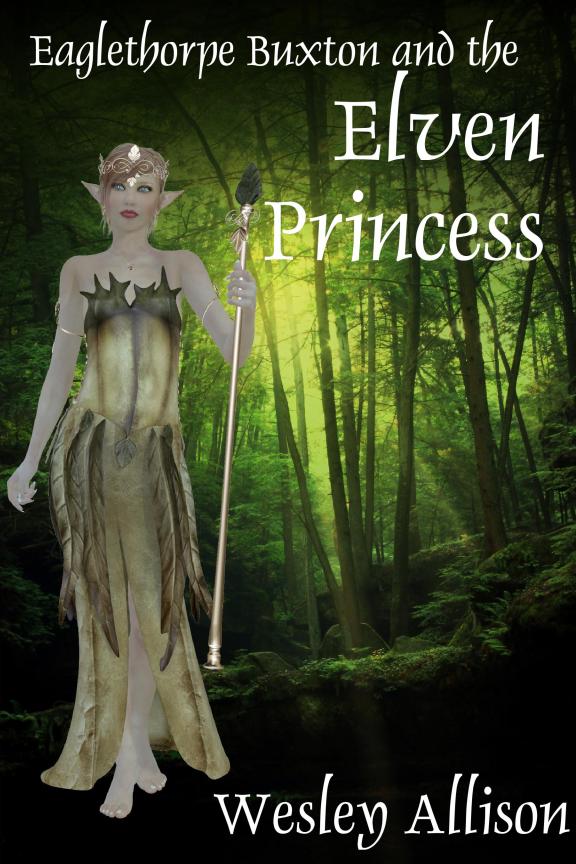
Eaglethorpe Buxton and the Elven Princess – Chapter 3


Chapter Three: Wherein I escape and lay my retribution upon my captors

I pulled the boy out through the hole that I had created and into the deep snow that had formed in a drift beside the shack. He almost disappeared, as he couldn’t have been more than four foot ten.

“Grab the back of my belt,” said I. “I will guide you. The first thing we must do is find my noble steed.”

“The stable is on the other side of the Inn, just beyond the cart path.”

“Very good. Come along. I am sure that the noise of our escape was heard and any moment I may have to fight off a dozen or so angry villagers with pitchforks and such.”

“Do you have a weapon?” asked the boy.

“I have a knife in my boot, but I would be loath to stick it into a person over such a thing as this.”

“They deserve it,” said the boy, now trailing along behind me as I negotiated my way around the buildings in the gloomy night. “If my father was here, he’d lay waste to this town.”

“Quite the fierce cobbler was he?”

“Um… yes. Before he died. Leaving me an orphan.”

I trudged through the snow around the large building that I know knew was the inn and crossed the cart path, distinguishable from the rest of the landscape by two parallel ruts in which the snow was not quite as deep as everywhere else. I perceived no danger from any direction and indeed could still hear the voices of men and women singing in the inn. The stable, which I would have recognized even without the orphan’s help, was dark and silent. The pleasant aroma of horse dung enveloped me as the slight breeze turned in my direction. I crept up to the large double door and pulled one side open slightly.

“Hysteria,” I called in a whisper and was answered by a gentle knicker, which is to say the sound that horses make when they are neither angry nor excited nor otherwise engaged.

Inside the stable was pitch black, and I cast around for a lantern, but the lad needed no such artifice.

“I see your horse in the last stall,” said he.

“You have very good night vision, orphan,” said I.

The little ragamuffin guided me by the hand to the far stall and by the time we arrived there I could make out the more prominent shapes including that of Hysteria, who tossed her head in greeting.

“Poor girl,” said I, running my hands over her. “They didn’t even bother to unsaddle you or remove your bit and bridle.”

“All the better for us and our escape,” said the boy.

I led Hysteria out of the stall, through the dark of the stable, and into the lesser dark of the night. It was in fact, quite a good night for traveling, at least as far as light was concerned. The moon was reflected off the white snow, and though the ghostly illumination created monsters of the many gaunt and gnarled trees, they were easily negotiated through. This put me in mind of a number of similar nights, when the moon was shining upon the snow. It seems somehow unfair that I more than most find myself sneaking in or out of town on cold, dark nights. I am not one to complain about my lot in life though, and then at that moment, as if to remind me that the lot of others was worse than my own, the boy tugged at my sleeve.

“What are you doing?” said he.

“I am pondering life,” I replied.

“Can you ponder life once we’ve made our escape from this wretched town?”

“Quite so,” said I, placing my foot in the stirrup. Once I was in the saddle, I reached down for my charge. “Come along orphan.”

“In some circles it might be considered rude to keep calling me an orphan,” he opined.

“Your parents are dead and so you are an orphan,” said I, lifting him up to sit behind me. “If I call you something else, your parents will still be dead.”

“Even so,” he agreed. “Let’s go.”

“Not until we make this town pay for its injustice and our indignities,” said I.

I spurred Hysteria forward, though truth be told I did not spur her precisely because I do not wear spurs. Spurs seem unnecessarily mean and pointed and Hysteria is possessed of something of a fragile ego. If one speaks harshly to her, she is likely to go into a mope for weeks on end and jabbing her haunches or belly with pointy metal objects could send her into a serious downward spiral of depression. It would be a sad thing to see. So I encouraged her forward. I urged her forward. I coaxed her forward. I asked her to go forward and she went forward, which now that I think about it, is the direction that she is usually most likely to go.

I guided Hysteria through the snow, across the cart path, and around the corner of the inn to the spot where upon I had first been laid hold of. I fully expected that the pie I had originally seen would by now be gone. As cold as the weather was, the pie would have gone from hot to warm to cool to quite cold in the time that I had spent escaping from the shack and rescuing my valiant steed, which is to say Hysteria. I was not wrong. The pie was gone. But Ho! There were now two new pies sitting on the very same window ledge.

Sitting astride Hysteria as I was, the pies were now at a level between my shoulder and my waist, and I could easily look inside the window. A fat woman with red cheeks and red hair and wearing a white apron was rolling out dough with a rolling pin. She was too busy to notice me. That was not the case with the stout fellow that at that moment entered from the common room beyond. He caught sight of me and let out a yell that could have, and in fact did, summon everyone in the place. The sounds of singing stopped as others rushed to see the source of his consternation.

“Let this be a lesson to you not to waylay innocent travelers!” I shouted, scooping up the pies, one in each hand. I urged Hysteria onward, but no doubt feeling the warm air exiting the window, she was loath to move. The orphan fixed that by slapping her on the backside, her fragile ego notwithstanding. She jumped and shot around to the front of the inn just as the gang of toughs from inside came out the front door. They were just in time to watch us race off into the darkness with two warm and steamy pies.

The Steel Dragon – The Series


Well, as I mentioned before, I was trying to decide if the Steel Dragon is going to be an ongoing series or a trilogy as original plotted. I’ve decided on a series. In fact, I am going to write two more books to fit between the three already written, so that those completed books will be 1, 3, and 5 in the series, while the new books will be 2 and 4. Then I can go on to write six and on.

His Robot Girlfriend – Chapter 5 Part 1


Chapter Five

The next morning Mike woke up late, but feeling great. He stretched in bed and then looked around. He had become used to being greeted as he woke with breakfast and that smiling, perfect face. But Patience wasn’t there. He wasn’t concerned. She was probably cleaning, rearranging the house, or buying and selling on eBay. Shaving and then popping into the shower, Mike shampooed his hair and washed his body, finding quite a bit of sand here and there. When he had dressed, he walked downstairs to the family room to find breakfast laid out for him on the coffee table—toast and orange juice. He sat down and ate while watching vueTee.

As he ate, he heard several vehicle horns honking outside. Not paying too much attention, he turned back to the vueTee. Battlefield Europa was on. Then he heard more honking. He was not one of those people who liked to get up and go outside to see what the neighbors were up to. He generally shied away from going outside the house at all, especially during the summer. The median temperature for June in Springdale was well over the century mark. But as the honking continued, Mike got up out of his chair, brushing off the toast crumbs, and walked through the hallway to the front door. Opening it, he was hit by the blast of hot air from outside and he squinted his eyes at the bright sunshine.

Mike had just managed to unsquint his eyes when another car went zooming by, honking, and he saw the source of the disturbance. Patience was in the center of the front yard, just beneath the shade of the large weeping willow tree, on her hands and knees. She was transferring potted pansies from small cardboard containers into neatly cut holes that she had made in the rich black soil of the flower bed. Her shapely ass was pointed toward the street and she was wearing the same tiny string bikini that she had worn to the beach.

“Patience!”

Patience looked up with a smile on her face.

“Come in here.”

Jumping to her feet, Patience hopped to the door. Her arms and legs were stained with dirt. Mike let her in and closed the door after her.

“What do you think you’re doing?”

“I am planting some flowers, Mike. Now that the house is clean and orderly, I have decided to spruce up the yard.”

“The honking horns weren’t an indication to you that you might be obstructing traffic? I’m surprise you didn’t cause an accident.”

“I was nowhere near the road,” said Patience, innocently. “The motorists have been honking warnings to each other, but it had nothing to do with me.”

“The drivers were honking because you had your ha-ha pointed at them. Why are you wearing your bikini?”

“I did not want to damage my clothes. I have ordered some work clothes, but they have not arrived yet.”

“Well, go get cleaned up. We have to go to Walmart.”

That’s just what they did. Cleaned up and dressed in something Mike considered more appropriate, though still fetching—a short red dress– Patience met him by the door. Climbing into the car, they drove the short distance to the discount superstore, where they purchased several pairs of shorts and simple tops for Patience. Mike also had her pick out a large floppy-brimmed hat. Though he knew that she wouldn’t get sunburned, it just didn’t seem right for her to be outside all day in the summer sun without one. Patience took the opportunity to purchase supplies for upgrading the yard. She bought garden edging, tools, flowers, fertilizer, and a yardbot. Mike was skeptical about spending two hundred eighty dollars on the boxy device which wandered around the yard cleaning the artificial turf that now by law had replaced all of the lawns in water-starved Springdale, but Patience made a convincing argument that it would beautify the outside of the house.

Returning home, Mike sat down in his recliner again and Patience, now dressed in white shorts and a little spaghetti-strap top, along with work gloves and her new floppy hat, returned to the yard. Mike watched the news, but began to feel as though he should be doing something around the house too. He went to the hamper, in the utility room just on the other side of the upstairs bathroom, thinking that maybe he could do some laundry. But the hamper was empty. He looked in the study to see if anything needed to be dusted. It didn’t. As a last resort he made his way into the kitchen to see if the refrigerator needed to be cleaned. It was not only cleaner but neater than it had ever been. He threw away an old bottle of steak sauce, even though he was sure it was still good.

Perhaps there was something he could do outside. Though he grimaced when he glanced at the digital thermometer by the door—132 degrees—he opened the door and stepped outside.

“Patience!” he shouted when he saw her.

His robot girlfriend lay prone on the turf, her arms and legs splayed in distressing angles. She was still half shaded by the willow tree, but her legs were sticking out into the direct sun. Rushing over to her, he knelt down and gently rolled her over. Her once human looking face, now motionless with eyes open, seemed more like a mannequin than anything that had once had animas. This effect was only heightened when Mike lifted her up in his arms to carry her to the front door. She weighed less that a human being, somewhere around eighty pounds Mike guessed, but unlike a human being, she didn’t bend and conform to an easily carried form. Her arms continued to stick out and her legs stayed stiffly straight. Kicking open the door, he carried her to the white couch and laid her down. She didn’t move and her eyes stared lifelessly at the ceiling.

“Shit, shit, shit.”

Mike felt her wrist. Her arms were hot from the sun, but there was no pulse. But of course she would have no pulse. He tried to see if he could detect anything wrong by looking into her eyes. He couldn’t. They looked just as they had looked, but without the slight movement that her eyes, like human eyes, had shown. Mike thought that they looked like they didn’t have Patience in them anymore, the way that he suspected a human being’s eyes would look when that person died, though he had never looked into the eyes of a dead person. Not even Tiffany’s.

“Tech support!” shouted Mike, as the thought hit him like a bolt of lightning.

He grabbed the remote off of the coffee table and turned on the vueTee. Quickly switching the browser to the Daffodil site, he saw the familiar large daffodil along the left side. The four large buttons filled the right side of the screen—Barone, Amonte, Nonne, and PWX. There didn’t seem to be a button for tech support. Mike moved his face very close to the screen. At the very bottom was a small flower symbol. He moved the curser over the spot and pressed. Immediately a man in a blue jumpsuit appeared on the screen.

“Good morning,” he said. “This is Daffodil Tech Support. For a list of known issues, press one. For a computer diagnosis of your problem, press two. To be contacted by a Tech Support representative, press three.”

Mike started to press three, then changed his mind and almost pressed two. At the last second, he moved his finger over the one button and pressed it. The blue clad man on the screen was replaced by a long list of text. The topmost line said “sudden crash upon software upgrade”.

Mike moved the curser over this line and pressed.

“A small service software update was pushed through the InfiNet 11:38 6.9.32,” said the next screen. “A small percentage of Amonte models have failed to reboot. This is a known issue and a patch is currently under development. Your Amonte may be restarted with the power button located on the back of the neck.”

Mike rushed back to Patience’s side. She had not moved from the spot on the couch. He felt behind her neck, his fingertips locating the three small holes and the button. He pressed it and counted aloud. “One, two, three.” Then he let go.

The Steel Dragon: Trilogy or Continuing Series.


Right now The Steel Dragon is in the slush pile at Baen books waiting to be read. It’s been there for four months and so I don’t expect to hear anything else for another five at least. When I wrote the book, I thought of it as one long novel (about 660,000 words). Once I was done, I decided it needed to be a trilogy and I began to think of it as my Lord of the Rings. In either form, it has a long and complete epilogue which tells what happens to all the characters for the rest of their lives.

When I finished writing, I really felt bad about not being able to write more about the world and the characters that I created, so I plotted out a story which goes between volumes two and three. Now after reading O Pioneers, I feel like even that is not enough and I want to write much more. I want to take off that epilogue and write out what happens to the characters in book form. I’m still thinking about this, so I don’t know what I’ll decide.

The Steel Dragon – Chapter 6 Excerpt


st1\:*{behavior:url(#ieooui) }

There seemed to be more people milling around on the starboard side of the ship, so he headed to the port, in hopes of finding a spot to sit. When he rounded the one of the battleship’s great gun turrets, Zeah saw why most of the others were eschewing this particular location. Zurfina the Magnificent was standing near the railing. Her blond hair was its usual, carefully cultivated chaos. She was wearing a dress which completely covered her from head to heel, but which was so tight and so contoured to her body, that it was more lewd than if she had been standing there naked. Zeah would have sworn that it was made from rubber, had such a thing been possible. The girl that had accompanied the sorceress when she had boarded was with her now. She too wore a black dress, in a more traditional style, though made of the same shiny substance. And the question of what type of animal that the sorceress had brought aboard with her was now answered. The case that she had carried when she had arrived now sat beside the girl, and on top of the case perched a small, sinewy, winged reptile. It had a long, snakelike neck, and an equally long, snakelike tale, four legs and two thin wings. It was covered in scales the color of new steel. Even its wings were covered. When it suddenly flapped them, sparkling reflections caused Zeah to cover his eyes. It was a dragon, the first that the head butler had ever seen. The girl was feeding it pieces of raw, red meat with a gloved hand. Between bites the tiny dragon would make growls reminiscent of an angry housecat, and the girl would giggle.

Zeah paused for a moment uncertainly. He was about to turn around and go back the way he had come, but the sorceress looked up and saw him. Not wanting to be seen a coward by one so powerful, he squared his shoulders and stepped forward with his porridge and pumpernickel. The girl was sitting on a case covering some type of shipboard equipment, and the butler moved to sit next to her only a few feet from the dragon and the obscenely dressed magic user.

“May I join you?” he asked.

“You are more than welcome, Mr. Korlann,” said Zurfina, in her smoky, sultry voice. “We are about to begin lessons. Perhaps you can benefit from them as well.”

Zurfina raised her hand and a glowing sphere rose up from the deck. It floated up until it reached the height of her shoulders, then began expanding and becoming more opaque, until Zeah recognized it as a globe of the world, which stopped growing at eleven or twelve feet in diameter. As it slowly spun in mid-air, Zeah could make out the shapes of the landmasses and oceans of the world.

“This is Greater Brechalon,” said Zurfina, and the shape of the four islands making up the country glowed.

“It’s little,” said the girl.

“Yes it is, Pet,” said Zurfina. “It’s just one of many countries on the continent of Sumir and Sumir is just one of the twelve continents. We’re going to this one—Mallon.”

Another portion of the globe was illuminated as it slowly rotated around in mid-air. This was a large portion of a tremendous landmass made up of four continents, and was almost on the opposite side of the world from Greater Brechalon and the rest of Sumir.

“And this spot right inside of Mallon, is the land of Birmisia

“It’s little too,” said the girl.

“True, it is only a small portion of Mallon, and yet it’s larger than all of Greater Brechalon. You see, that’s why the King and the Prime Minister want colonies on all these other continents. There is all this land, just sitting there, filled with the riches of nature, and no one to reap them—a vast world without the benefits of civilization.”

“What’s so great about civilization?” asked the girl.

“You see, Mr. Korlann?” said Zurfina. “Out of the mouths of babes come great truths.”

“Out of the mouths of babes and sucklings hast thou ordained strength over thine enemies, that thou might slay them and lay waste to their lands and their flocks,” quoted Zeah. “For the kingdom of the Lord shall reign over all the other kingdoms of the world.”

“Yes, well,” said Zurfina. “She has plenty of time to become disillusioned later.”

Zeah was startled by the tiny steel dragon, as it let out a short growl. The little beast was undeniably beautiful. It reminded the butler of a statue that was heavily detailed—the pointed barb and the end of its tail, the whiskers around its face, each individual scale fitting neatly together as it moved.”

“You have a question, Mr. Korlann?” asked Zurfina.

“Is this a real dragon?”

“Most assuredly.”

“Aren’t they… well, dangerous?”

“Most assuredly.”

“How large will it get?”

“Far too large to sit where it is now sitting,” said Zurfina, her smoky voice punctuating the image.

The girl fed the dragon one last piece of meat, and then took off the leather glove that had protected her hand. The dragon, evidently unhappy that his meal was over, let out a particularly long and unhappy growl.

“Does it have a name?” asked Zeah.

“Of course,” said Zurfina.

“We don’t know it yet,” said the girl. “He’s too little to talk.”

Zurfina clapped her hands and the giant globe disappeared. She snapped her fingers and the carrier, on which the little dragon sat, popped open. The dragon squawked unhappily, but climbed down into the carrier, then tried to bite the girl as she reached down to close the door.

“Brassy berk!” said the girl.

“No more lessons today, Pet,” said Zurfina. “I’m going to take a nap. Put our boy away and then practice your magic.”

The girl picked up the animal carrier and began lugging it forward. Zurfina smiled at Zeah and winked. He half expected her to raise her arms above her head and disappear, but she didn’t. She just followed the child carrying the dragon, and all three passed through an open hatch and out of eyesight. Zeah ate several bites of his porridge; just enough to have something on his stomach, then poured the rest over the side and tossed his bread in the ocean after it. Then he walked back to the stern to return his bowl.

Zeah didn’t see Zurfina the Magnificent for more than a week after that day, but she was not the only purveyor of the mystical arts aboard. Two wizards had been hired by Master Augie and had joined the expedition as part of the mercenary company commanded by Master Terrence. The first was a war wizard named Dudley Labrith, who had served with Lieutenant Dechantagne’s battalion in the Royal Colony of Birmisia. He was a tall, well-built man with dark black hair and a neatly trimmed mustache, and had been born in the great city of Brech. He dressed like the rest of the military men on the expedition, in khakis and pith helmet. The other wizard was from Mirsanna. His name was Suvir Kesi. His dark complexion and unusual comb mustache alone would have made him stand out among the crew and passengers, but he accentuated his differences even more by wearing traditional clothing of his homeland—a bright blue silk shirt and loose fitting black pants tucked into his high black boots, and a yellow fez with a blue tassel on top. Several days after his encounter with the sorceress, her ward, and the dragon, Zeah found the two wizards huddled together along the railing. As he approached, they both turned to greet him.

“Good morning, Mr. Korlann,” said Kesi, his pronounced Mirsannan accent making his words sound oily and slick. “It is Mr. Korlann, is it not?”

“Yes. And I have the pleasure of addressing the Great Wizard Labrith and the Great Wizard Kesi?”

Regardless of just how great they might be, Zeah assumed that it was a good idea to play it safe. Even low level wizards could be quite dangerous for someone with no magical talent at all, like himself. The two wizards nodded in acknowledgement.

“Tell me, Mr. Korlann,” said Labrith. “Which cabin belongs to Zurfina the Magnificent?”

“It’s…why do you want to know?”

“To introduce ourselves,” said Kesi. “Give her a chance to get to know us.”

“Oh, I’ve long been an admirer,” said Labrith.

“I, as well,” said Kesi.

“It’s… you know,” said Zeah. “I’m afraid that I don’t remember which cabin she was assigned. I must have it written down in my notes, back in my cabin.”

The two wizards glanced at one another.

“Don’t worry yourself about it,” said Kesi.

“No. It wasn’t anything important,” said Labrith.

“You know,” said Kesi. “This Zurfina is quite well known among practitioners of the arts. I am quite surprised that she would sign on to this type of expedition. With power of her sort, she could be the royal wizard in any country she chose… if this is the same Zurfina of which I have heard.”

“Quite, quite,” said Labrith. “It was my understanding in fact, that the Ministry of War was looking for her in Brech, but was never able to find her. How were you able to find her, Mr. Korlann?”

“Miss Dechantagne contacted her,” said Zeah, “on the advice of a wizard from Mernham Yard.”

“Interesting,” said Labrith.

“Yes, indeed,” said Kesi.

“Well, I have much to attend to,” said Labrith, nodding. “Good day to you, Mr. Korlann. Good day to you, Wizard Kesi.”

“Yes. Good day to you, Wizard Labrith.” said Kesi. “Good day, Mr. Korlann.”

The two wizards turned and departed, each in a different direction. Zeah continued on his way. He had much to attend to as well, though he couldn’t help but wonder at the strange twists of fortune which would place an ordinary butler on a battleship in the middle of the ocean with several wizards and a dragon.

Eaglethorp Buxton and the Elven Princess – Chapter 2


Chapter Two: Wherein I become the sole guardian and protector of an orphan

“I am not a pie thief,” said I, waiting for my eyes to adjust to the limited light of the little room. “If anything, I am a procurer of pies to be paid for at a later time, that is to say an eater of pies on account.”

“I don’t judge you,” said the little voice from the dark corner. “After all, am I not incarcerated for the same crime? It may well have been the same pie that I attempted to steal earlier in the evening that you tried to…”

“Check for doneness,” I interrupted.

“Steal.”

“Taste test.”

“Steal.”

“Borrow.”

“Steal.”

“For someone who doesn’t judge, you seem quite judgmental to me,” I opined. “And if self control did escape me for a moment, could I be blamed. Here am I, a cold and weary traveler from a far land, cold to the bone and hungry. And there sits a pie, and not just any pie, but a pie for the ages, sitting as if waiting especially for me, on the window ledge.”

“Mistress Gaston is an excellent pie smith.”

“I shall have to take your word for that.” said I, starting to make out the form of a child. “And what is it they call you, lad?”

“I am called Galfrid.”

“Come out of the corner and let me have a look at you.”

“Promise me that you won’t hurt me,” said he.

“All the country knows the name of Eaglethorpe Buxton and it knows that he is not one to harm children and ladies, nor old people or the infirm. Rather he is a friend to those who are need of a friend and a protector to those who are in need of a protector and a guardian to those who are in need of a guardian.”

“So long as it is not a pie that needs guarding,” said he.

“Pies are something altogether unique. Pies are special, that is to say they are wonderful, but not rare. No, indeed they are common, but that does not make them worthless. Quite the contrary. Life is quite like a pie, at least in-so-much-as a life lived well is like a pie—warm and delicious on the inside with a protective crust. There are places in the world where pies are worshiped.”

“No.”

“No what?”

“There is no place in the world where pies are worshipped.”

“That is not worshipped, but revered as one might revere the saints.”

“No.”

“Far to the east of here, in the city of Bertold, in the land of Holland, they revere pies.”

“No. There is no city of Bertold in Holland and nowhere east of here do they revere pies.”

“You are a saucy boy,” said I. “And if they do not revere pies east of here, then I should not like to travel in that direction.”

“So are you implying that you are this Englethorpe Boxcar and that I therefore have nothing to fear from you?”

“Eaglethorpe, with an A instead of an N, and Buxton, with an X and a ton, and yes, I am he and you have nothing to fear. Though to be sure there are plenty who would claim the name of Eaglethorpe Buxton, with and E not an N and an X and a ton, because greatness will ever have its imitators.”

“So you might well be an imposter,” said he.

“You may rest assured that I am not,” said I.

“But if you were an imposter, would you not insist that you were not an imposter?”

“You may be sure that I would.”

“Then how can I trust that you are the real Englethorp Boxcar?”

“Just look at me!” I exclaimed, throwing my arms out and giving him a good look.

“Swear that you will not harm me?” said he. “And furthermore, swear that you will be my protector and guardian until I can return to my home?”

“How far away do you live?”

“Not far.”

“I swear to be your protector and guardian until you reach you home, though it be on the far side of creation,” said I. “Now come closer and let me get the measure of you.”

The lad crept forward until he stepped into a beam of moonlight shining through a space between the boards of the shack wall. He was a slight little ragamuffin, with a build that suggested he had not eaten in some time. He had a dirty face and wool cap pulled down to his eyes. His clothes were dirty and torn, but I immediately noticed that his shoes while dirty seemed too fine for a ragamuffin such as this. I asked upon them.

“You see, Sir Boxcar, my parents were, um… cobblers… but they died, leaving me a destitute and lonely orphan child. These shoes were the only things they left me.”

“May they rest in peace,” said I, whipping off my cap, which is only proper courtesy to offer, even if one is only offering it to an orphan. “But on to the situation at hand. I see that you are a sturdy boy, despite your condition. Why did you not bust out of this shack? It looks as though it would take no more than a couple of kicks.”

The lad stared at me with his mouth open, obviously chagrined that he had not thought of this means of escape himself. “Yes,” he said at last. “I am a sturdy boy…. but I think you will find the shack is sturdier than it looks. It is hammered together with iron nails.”

I turned and leveled a kick at the side wall through which crack I had but a moment before been peering through. One of the boards flew off, landing in the snow six or seven feet away and leaving an opening almost big enough for the boy to pass through. I kicked a second board off the side of the structure and I was outside in a jiffy. Turning around, I reached through to aid my companion’s escape.

“Come along orphan,” said I.