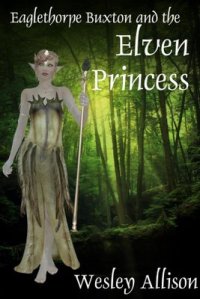
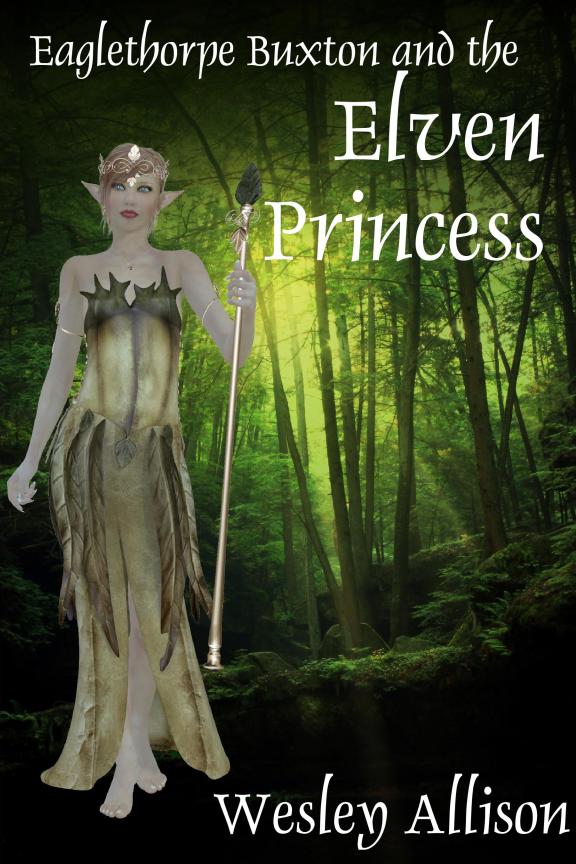
In addition to the ebook version from Smashwords (Available by clicking on the image on the right), Eaglethorpe Buxton and the Elven Princess is now available at Feedbooks.com. Get it by clicking RIGHT HERE.

In addition to the ebook version from Smashwords (Available by clicking on the image on the right), Eaglethorpe Buxton and the Elven Princess is now available at Feedbooks.com. Get it by clicking RIGHT HERE.
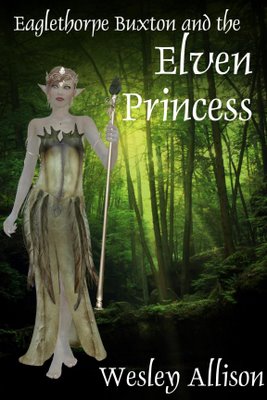

As you have noticed, Eaglethorpe Buxton and the Elven Princess is now available as a free ebook. Download it today in your choice of several formats. Just follow the link at the right.
Allow me to introduce myself. I am Eaglethorpe Buxton, famed world traveler and story-teller. Of course you have heard of me, for my tales of the great heroes and their adventures have been repeated far and wide across the land. In truth I am probably better known in any case as an adventurer in my own right than as a teller of the adventures of others. From storied Aerithraine, where I once had the pleasure of spending a fortnight in the company of the Queen, to distant Holland, I have wondered the world being a friend to those in need of a friend, a protector to those in need of a protector, and a guardian to those in need of a guardian.
Eaglethorpe Buxton is a fool and a hack. You couldn’t find a writer of less wit and style.
– Dextius Winterborn, Story-teller’s Guild.
Without a doubt, the biggest liar that ever walked the world.
– Sir Roderick Bairn, Adventurer
That boy will never amount to anything. Mark my words, he was born to hang.
– Margram Buxton, Father
Who? I don’t believe I’ve ever heard of him. Yes. No, I’m sure I haven’t.
-Queen Elleena I of Aerithraine
Join Eaglethorpe Buxton as he adventures across a magical world to help… a poor orphan child? An elven princess? Who can know for sure, when it is Eaglethorpe himself who tells the tale?
Eaglethorpe Buxton and the Elven Princess is a short book by Wesley Allison, author of His Robot Girlfriend, and Princess of Amathar. Available now as a free ebook and soon, for a nominal fee, as an old-fashioned paper book at fine bookstores everywhere.

I feel like I’ve been running around with my head cut off, trying to write and publish and study for my Masters and teach. Bah! I’ve got to get organized. While I wait on any word of Senta and the Steel Dragon from Baen Books, I need to get things going. Here is my plan.
1. Hardbound “His Robot Girlfriend”
As the Target lady says “Approved!”. You should see it at Amazon soon.
2. Multi format ebooks of “His Robot Girlfriend”
Now available!
3. Finish writing “Eaglethorpe Buxton and the Elven Princess”
It’s done!
4. Publish paperback “Eaglethorpe Buxton”
Waiting for the Review Copy.
5. Free multi-format ebook “Eaglethorpe Buxton”
Available today!
6. Second edition of “Princess of Amathar” in hardbound and paperback.
7. Multiformat ebook of “Princess of Amathar” with a new lower price.
Of course, if word should come that someone wants to publish Steel Dragon, everything goes on hold as I finish book two.

Goblins are nasty little blighters. They remind me of my cousin Gervil’s friend called Rupert. His name was Sally, which explains why he was called Rupert. But like goblins, he was short and had a big, round head. I don’t know why goblins have such large heads for their little bodies. Of course I don’t know why Rupert did either. There doesn’t seem to be much advantage in it. On the other hand, goblins have excellent night vision, making it very easy to sneak up on people in the dark. And they have abnormally large mouths with an abnormally large number of teeth in them. This was very unlike Rupert, that is to say Sally, who as I recall had only five or six teeth, though he made up for that by having an extra toe. In addition to which I don’t believe his night vision was all that it might have been, for once he kicked me in the head when he was on his way to the outhouse. Of course that could have been on purpose. Rupert was a bit of a nasty blighter too.

Hysteria clomped along slowly down the snow covered road for some time. The orphan was so quiet that for a while I thought he must have fallen asleep. But at last he stirred and shifted a bit in his seat, which is to say upon Hysteria’s flank. I myself had been quiet as I remembered the events of that horrible night.
“What are you thinking about?” asked the orphan.
“I’m thinking about that horrible night,” I replied.
“Did you never find your family?”
“No, though I searched for weeks. My mother was to make me a blueberry pie that night, and I not only have never seen my mother since, I did not get to eat that pie either.”
“I’m sorry I brought up such a painful memory,” he said, then paused. “Do you suppose that the purple drops on the floor could have been from your blueberry pie?”
I felt the heat rising up within me.
“Fiends!” said I. “To rob a man of his mother and his pie in the same night.”
“Perhaps it were best that we think on something else,” said he.
“Perhaps,” I agreed.
“If you are really such a great story-teller…”
“The greatest in the world.”
“And if the story of the Queen of Aerithraine is a great story…”
“Wonderful. Exciting. True. Profound.”
“Well, maybe you could tell me the story.”
“I get half a crown for that story in Illustria,” said I.
“I have a shiny penny,” said he.
“The story begins in Aerithraine, far to the west, along the coast of the great ocean sea. From storied Illustria, its capital, to Cor Cottage just outside Dewberry Hills in River County, Aerithraine has been a great and powerful country for some seven hundred years more or less. By more or less, I mean that it has been more or less seven hundred years that Aerithraine has been a country and that it has been more or less great and more or less powerful during those seven hundred years. But about fifty years ago, it was less. Then the old king died, and as is the way of kings, a new one was crowned. He was King Julian the Rectifier.
“He was called Julian the Rectifier because he was chiefly interested in rectifying. He spent most of his time rectifying. He rectified all over the place. And he was good at it. He rectified like nobody else.”
“It means setting things to right,” said the orphan.
“Of course it does and that is just what he did. Under his reign, the kingdom was prosperous and wealthy. And as he wasn’t so interested in warring as in rectifying, there was peace throughout the land. King Julian had only one son, and he passed to that son the strongest and wealthiest kingdom in all of Duaron, and if it had only remained so, Elleena would have become a minor princess perhaps or might not have been born at all.”
“Which would not have made a half-crown story,” pointed out the orphan.
“That is so.”
“Carry on then.”
“King Justin was the son of Julian. I hear tell that he was once called Justin the Good and Justin the Wise, though now when story-tellers refer to him, they usually call him Justin the Weak or Justin the Unready.”
“What do you call him?”
“I just call him King Justin,” said I. “Though I truly believe he may deserve the title Justin the Brave, that is not what the listeners want to hear.”
“Go on.”
“King Justin married a princess from the faraway land of Goth. The Arch-Dukes of Goth, which is to say the rulers of that land, have for generations, maintained power through a tightly woven web of treaties with its mighty neighbors. Their chief barter in this endeavor is the marriage of the many female members of the family. I hear the current Arch-Duke has but four daughters at least as of yet, but his father who was Arch-Duke before him had seventeen, and his father nineteen.”
“That hurts just thinking about it.”
“What?”
“Nothing. Go on.”
“It must have been quite a coup of diplomacy for the Arch-Duke of Goth to make a match with the King of Aerithraine, but he did, marrying to the King his daughter Beatrix. And though I hear that the women of that country wear too much make-up, she was known as a great beauty with pale white skin, raven hair, smoldering eyes, and a gold ring in her nose, as is the fashion in the east.
“King Justin and Queen Beatrix had four strong sons, the eldest of whom was Prince Jared. He was particularly beloved of the people. I saw him once when I was a child of four or five, sitting on my poor old father’s shoulders as the Purple Knights passed on their tall white steeds, that is to say, I was seated on my father’s shoulders and the Prince was not. I don’t remember why they were in River County. It was too long ago. He would have grown to be King upon his father’s death if it was not for…”
“Goblins!”
“Yes, that’s right. You didn’t say you had heard the story before, though I’ll warrant it wasn’t told as well…”
“No!” screamed the orphan. “Goblins! Right there!”
He pointed straight ahead, and sure enough, stepping out of the shadows and into the moonlight were a half dozen creepy little man-things. They were no more than three feet tall, their over-sized round heads, glowing eyes, and gaping maws giving away their identity. As they came closer those mouths widened into grins filled with jagged little teeth, looking far too much like the teeth on the blade of a cross-cut saw for my taste. They brandished what weapons they had, mostly things they had picked up from the ground—a stick, a length of cord with a knot in it. But a couple of them carried old, discarded straight razors.
“You said that you do not live far from here,” I mentioned, once we had finished the pies. One might say the purloined pies, but I would insist that they rightly belonged to us in recompense for our unjust confinement.
Chapter Four: Wherein we make decisions about our supper
When we were not two hundred yards down the road, I let Hysteria drop to a trot, for in truth I did not expect anyone to follow us into the night, daring wild animals, bandits, or hobgoblins regardless of how fine a pie smith Mistress Gaston was reported to be. A few hundred yards beyond that, she dropped of her own accord to a walk and I expect she was beginning to feel a bit mopey because of the slap the orphan had dealt her. At that moment I was less interested in her mental condition than my own physical one though, because I was holding a cast pie pan in each hand and they were both heavy and still quite warm.
“Here.” I turned in the saddle and handed one pie to the orphan. “We can eat while we ride. If we wait until we find a campsite, the pies will be cold.”
“Do you have a fork?” the boy asked.
I mused that this seemed an unlikely request from any boy, most of whom I have found uninterested in tableware on the best occasion, and especially from an orphan whom one might have supposed to have been forced by necessity to dig into all manner of food scraps with his hands. However it was not a question to which I needed to reply in the negative, for I always carry a fork in the inner left breast pocket of my coat, which I call my fork pocket. I gave the orphan my fork and pulled my knife from my boot to use on the remaining pie.
“This is a very nice fork,” said the orphan.
“Of course it is,” said I. “That fork came from the table of the Queen of Aerithraine herself.”
“You stole this fork from a Queen?”
“Impudent whelp!” cried I. “That fine fork was a gift from the queen, with whom I once had the pleasure of spending a fortnight.”
“What kind of queen gives a man a fork?”
“A kind and gracious one.”
That apparently satisfied the boy’s curiosity for the moment and for the next few minutes we concentrated upon the pies. I am not one to mourn a lost pie and that is well, for the pie that was lost to me on that night, as I have previously mentioned, was a pie for the ages. A fine pie. A beautiful pie. A wonderful pie. This new pie was almost as good though. It was a crabapple pie, which was a common pie to come upon in winter in those parts, which is to say Brest, as cooks used the crabapples they had put up the previous fall. This pie was an uncommonly good pie, with nutmeg and cinnamon and cloves and butter. I had more than a few bites by the time the boy spoke again.
“What kind of pie is that?”
“Crabapple,” I replied. “What pie do you have?”
“It is a meat pie.”
“A meat pie,” I mused, as I thought back upon how long it had been since I had eaten any other meat than the dried venison I had in my saddlebag. I had eaten a sausage a week before, but it had been a fortnight and half again since I had eaten mutton stew with potatoes and black bread in Hammlintown. That had been a fine stew and the serving wench who brought it to me had been nice and plump and had smiled quite fetchingly when she had set down the tray. Stew is a wonderful food and even when it is not served by a nice and plump serving wench, it always seems to give me the same feeling when I eat it that a nice and plump serving wench gives me when I see her.
“What are you doing now?” asked the orphan.
“Pondering stew,” said I.
“Well stop it. Rather ponder this instead. You eat half of your crabapple pie and I will eat half of my meat pie. Then we can trade and eat the other halves of each others pies.”
“Alright,” I agreed. “But this will mean that I have to eat my dessert first and my supper after.”
“Just pretend that the meat pie is your dessert and the crabapple pie is your supper.”
“A crabapple pie could be a fine supper. In fact I have been to countries where the most common part of a supper is crabapple pie.”
“Fine then.”
“But a meat pie is in no country a dessert.”
“Then trade me now.”
“How much have you eaten?” I asked.
“About a fourth. How much have you eaten?”
“About a fifth.”
“Then eat another twentieth,” said he. “Then we will trade pies and each eat two thirds of what remains and then trade them back. At that point, we will each eat what remains of the pie we originally started with. That way you can think of the first portion of the crabapple pie as an appetizer, the portion you eat of the meat pie as your supper, and the final portion of the crabapple pie as your dessert.”
“You are a fine mathematician for an orphan,” said I. “But it suits me. Will it not bother you that your appetizer and your dessert are of meat pie and your supper is of crabapple pie?”
“I have decided that I will make this sacrifice,” said he. “Since it was you that provided the meal.”

Chapter Three: Wherein I escape and lay my retribution upon my captors
I pulled the boy out through the hole that I had created and into the deep snow that had formed in a drift beside the shack. He almost disappeared, as he couldn’t have been more than four foot ten.
“Grab the back of my belt,” said I. “I will guide you. The first thing we must do is find my noble steed.”
“The stable is on the other side of the Inn, just beyond the cart path.”
“Very good. Come along. I am sure that the noise of our escape was heard and any moment I may have to fight off a dozen or so angry villagers with pitchforks and such.”
“Do you have a weapon?” asked the boy.
“I have a knife in my boot, but I would be loath to stick it into a person over such a thing as this.”
“They deserve it,” said the boy, now trailing along behind me as I negotiated my way around the buildings in the gloomy night. “If my father was here, he’d lay waste to this town.”
“Quite the fierce cobbler was he?”
“Um… yes. Before he died. Leaving me an orphan.”
I trudged through the snow around the large building that I know knew was the inn and crossed the cart path, distinguishable from the rest of the landscape by two parallel ruts in which the snow was not quite as deep as everywhere else. I perceived no danger from any direction and indeed could still hear the voices of men and women singing in the inn. The stable, which I would have recognized even without the orphan’s help, was dark and silent. The pleasant aroma of horse dung enveloped me as the slight breeze turned in my direction. I crept up to the large double door and pulled one side open slightly.
“Hysteria,” I called in a whisper and was answered by a gentle knicker, which is to say the sound that horses make when they are neither angry nor excited nor otherwise engaged.
Inside the stable was pitch black, and I cast around for a lantern, but the lad needed no such artifice.
“I see your horse in the last stall,” said he.
“You have very good night vision, orphan,” said I.
The little ragamuffin guided me by the hand to the far stall and by the time we arrived there I could make out the more prominent shapes including that of Hysteria, who tossed her head in greeting.
“Poor girl,” said I, running my hands over her. “They didn’t even bother to unsaddle you or remove your bit and bridle.”
“All the better for us and our escape,” said the boy.
I led Hysteria out of the stall, through the dark of the stable, and into the lesser dark of the night. It was in fact, quite a good night for traveling, at least as far as light was concerned. The moon was reflected off the white snow, and though the ghostly illumination created monsters of the many gaunt and gnarled trees, they were easily negotiated through. This put me in mind of a number of similar nights, when the moon was shining upon the snow. It seems somehow unfair that I more than most find myself sneaking in or out of town on cold, dark nights. I am not one to complain about my lot in life though, and then at that moment, as if to remind me that the lot of others was worse than my own, the boy tugged at my sleeve.
“What are you doing?” said he.
“I am pondering life,” I replied.
“Can you ponder life once we’ve made our escape from this wretched town?”
“Quite so,” said I, placing my foot in the stirrup. Once I was in the saddle, I reached down for my charge. “Come along orphan.”
“In some circles it might be considered rude to keep calling me an orphan,” he opined.
“Your parents are dead and so you are an orphan,” said I, lifting him up to sit behind me. “If I call you something else, your parents will still be dead.”
“Even so,” he agreed. “Let’s go.”
“Not until we make this town pay for its injustice and our indignities,” said I.
I spurred Hysteria forward, though truth be told I did not spur her precisely because I do not wear spurs. Spurs seem unnecessarily mean and pointed and Hysteria is possessed of something of a fragile ego. If one speaks harshly to her, she is likely to go into a mope for weeks on end and jabbing her haunches or belly with pointy metal objects could send her into a serious downward spiral of depression. It would be a sad thing to see. So I encouraged her forward. I urged her forward. I coaxed her forward. I asked her to go forward and she went forward, which now that I think about it, is the direction that she is usually most likely to go.
I guided Hysteria through the snow, across the cart path, and around the corner of the inn to the spot where upon I had first been laid hold of. I fully expected that the pie I had originally seen would by now be gone. As cold as the weather was, the pie would have gone from hot to warm to cool to quite cold in the time that I had spent escaping from the shack and rescuing my valiant steed, which is to say Hysteria. I was not wrong. The pie was gone. But Ho! There were now two new pies sitting on the very same window ledge.
Sitting astride Hysteria as I was, the pies were now at a level between my shoulder and my waist, and I could easily look inside the window. A fat woman with red cheeks and red hair and wearing a white apron was rolling out dough with a rolling pin. She was too busy to notice me. That was not the case with the stout fellow that at that moment entered from the common room beyond. He caught sight of me and let out a yell that could have, and in fact did, summon everyone in the place. The sounds of singing stopped as others rushed to see the source of his consternation.
“Let this be a lesson to you not to waylay innocent travelers!” I shouted, scooping up the pies, one in each hand. I urged Hysteria onward, but no doubt feeling the warm air exiting the window, she was loath to move. The orphan fixed that by slapping her on the backside, her fragile ego notwithstanding. She jumped and shot around to the front of the inn just as the gang of toughs from inside came out the front door. They were just in time to watch us race off into the darkness with two warm and steamy pies.
 City of Amathar