Tesla’s Stepdaughters – Penny Dreadful

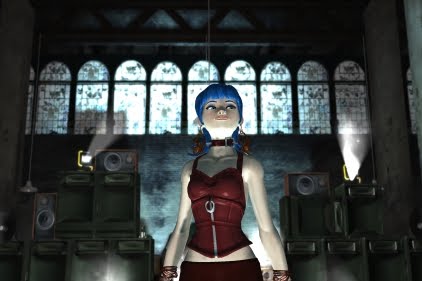
Penny DreadfulPenny Dreadful is one of the four musician characters in Tesla’s Stepdaughters. What was her inspiration?

In as far as The Ladybugs are an alternate world analogy of the Beatles…
Penny is a mixture of Lennon and McCartney, with a bit of Harrison. She’s a hard rocker and a large woman, a bit like Ann Wilson of Heart.

She’s the greatest guitar player of all time, and oh yeah, she’s a clone.

Read about her and the other Ladybugs in Tesla’s Stepdaughters.

Tesla’s Stepdaughters – Ep!phanee

Ep!phanee (Piffy)Ep!phanee (pronounced Epiphany) or Piffy is one of the four musician characters in Tesla’s Stepdaughters.  What was her inspiration?

In as far as The Ladybugs are an alternate world analogy of the Beatles…
Piffy is a mixture of Lennon and McCartney.  Song writing style, she’s more Lennon.  Management put her at odds with the other three band members: ala McCartney.  And like McCartney, she’s always looking to “do it in the road.”

She’s a wild chick with a bit of Joan Jett in her and stylewise she’s a bit Lady Gaga and Bjork too.

Read about her and the other Ladybugs in Tesla’s Stepdaughters.

Tesla’s Stepdaughters – Chapter 1 Excerpt

Tesla's StepdaughtersRain beat against the wide windows of the promenade deck as the massive form of the S.S. Lady of Angels descended through the clouds. The dirigible, one of the largest in the air, had made the trip from Los Angeles to New York in just over twenty-six hours, almost two full hours ahead of schedule. In a few minutes, the mooring team would have it fastened to the ground at LaGuardia, and its passengers would be debarking. The great golden craft was one of the latest generation of airships. Massive, as if someone had turned the Empire State Building on its side and launched it through the air; fast, propelled by six huge steam powered propellers; but unlike the other two dozen gigantic vessels at the airport, the Lady of Angels had only a few passengers—the four members of the rock band the Ladybugs, their managers, staff, and crew.

“Is it going to be raining at Shea Stadium?” asked Ruth De Molay, her island accent a blend of American and British dialect.

“Yes,” answered Alexa Rothman, “but don’t worry; you’ll have a cover over you.”

“I assume the electrical will be covered too,” she said, but to this there was no answer.

“We’re on the radio-vid again,” said Steffie Sin, peering at the nineteen-inch monochrome monitor on the wall. A female reporter spoke into a microphone.

“It’s less than two hours before what some have dubbed ‘the concert of the century’ tonight at Shea Stadium, where performing live for the first time in ten years, the greatest rock combo of all time will begin the American leg of a historic world tour.” The image on the screen switched from the attractive female reporter to images of thousands taking their places in the stadium. “The Ladybugs burst onto the world stage in 1963, the head of the female invasion with their cover of Buddy Holly’s Peggy Sue. This was followed by a string of hits, most written by the band’s four members. At one point in 1965 the group held sixteen spots concurrently on Billboard’s top one hundred singles chart. Releasing two to three albums a year and maintaining a grueling tour schedule kept the Ladybugs at the top, but then in 1967, weary of life on the road they moved to their studios in the Virgin Islands, where they released such cutting edge studio albums as Blessed Nobody, Platinum Dream, and the self-titled double album. Even as their last two albums were being marketed however, longstanding personality and management conflicts within the group broke it apart, and in 1970 the band split up, many believed forever. Now, five years later, hot on the heels of the Christmas release of Rebel Girls, the band makes its triumphant return to the concert stage.”

The great dirigible had dropped below the cloud bank now, turning majestically to start its final descent. Stretching out into the distance, one could make out the pillars of smoke rising from a thousand different smokestacks, each belonging to one of the many, many gigantic steam engines that provided electricity for New York City. The reporter on the radio-vid continued.

“We have confirmation that the band’s airship is now arriving at the airport. All four members are confirmed to be aboard. As everyone knows, the Ladybugs are Steffie Sin, Penny Dreadful (born Penelope Dearborn) both of Los Angeles; Ep!phanee (born Theresa Maria Bergman) of Stockholm; and Ruth De Molay, a native of the Virgin Islands. Ep!phanee and Dreadful have both released a series of successful solo albums while Sin and De Molay have released music more sporadically, the latter focusing on a successful movie career while the former has spent a great deal of time in seclusion in Switzerland.”

“Turn that shit off,” said Penny.

“I want to hear what people are saying about us,” replied Ruth.

“Don’t pay any attention to her,” said Steffie. “She’s just pissed off because they used her real name on the air.”

“Penny Dreadful is my real name. I had it legally changed.” She looked like she wanted to say more, but at that moment the captain’s Texas drawl came over the speaker.

“Attention passengers. As we come in for a landing at LaGuardia, I’d like to express thanks on behalf of myself and the company to all of you for flying Pan American Lines, and on a personal note I’d like to say what a privilege it is to pilot the greatest musicians of all time to their first concert of the decade. The crew and I will be looking forward to transporting you safely to Chicago in two days time. In the meantime, break a leg. Here in Queens, the temperature is a balmy 62 degrees and the local time is 6:55 PM.”

“She has a lovely voice,” said Penny.

“She doesn’t know shit about music though,” said Steffie. “If we’re the greatest musicians of all time, where do you rate Mozart, Beethoven, or Enrico Caruso?”

“Do we have time to get to the stadium?” asked Ruth.

“No problem,” assured Alexa, “assuming Piffy has her hair done.”

The last two hours had been spent getting ready for the concert. The band members had donned their custom-made outfits, each a very expensive update of the costumes they had worn on their 1964 tour. They consisted of spandex leggings and a matching bustier. Penny’s was bright red to match her hair which been carefully formed into faux dreads. Steffie’s was black, contrasting with her platinum blond tresses, which were braided into two massive pony tails and interwoven with white and black ribbon. Ruth’s outfit was blue and a blue headband held her natural dreadlocks back.

“I’m ready,” said Ep!phanee standing in the doorway in her own blue outfit, her bright blue hair styled into two buns, one on either side of her head.

The great dirigible made its landing and the crew began hustling instruments to one of the six large airflivvers parked nearby. The band waited impatiently beneath the humongous fuselage for their vehicle to be ready. Each had pulled on their goggles. The air, while breathable, would burn one’s eyes in a very short time without protection.

Alexa stepped close to them. “We’re going in four separate flivvers.”

“Why?” asked Ep!phanee.

“Safety.”

“They got another death threat on me,” said Penny.

“It’s that damned song,” said Steffie. “I told you it was going to be trouble. People aren’t ready to accept homosexuals.”

“We’re all homosexuals,” replied Penny. “I’m just being honest about it.” Then she looked at Alexa. “No offense.”

“You know I still love you.” Though Alexa had cut her hair short, drawn on a pencil thin mustache, and was wearing a man’s suit, she had made no attempt to hide her DD cup breasts.

“We’re all riding together,” said Ep!phanee. “The fans expect to see us climb out of the same hatch.”

“Are you sure?”

Without any further word, Ep!phanee held her umbrella up and stepped briskly across the tarmac to the airflivver parked just in front of the one into which the instruments had been loaded. The others followed. Once all five women were seated, the pilot started the engine. The long, broad dragonfly wings on either side of the vehicle began to flap in a circular motion. The crew, staff, and security piled into the other four craft, and the six airflivvers lifted off together, sailing over the airport terminal, turning in a gentle banking maneuver and winging their way toward Shea Stadium.

Airflivvers had come into use in the early days of the Science War. Afterwards they became common for commercial use. On their first visit to Shea Stadium in 1964, the group had flown in an early Douglas model. These were made by Mitsubishi, and were not only state of the art, but were high class comfort as well.

The convoy stayed below the cloud cover and weaved in and around the great columns of black smoke that were rising into the sky. Within moments they were out of eyesight from LaGuardia, and anyway, their attention was on what was before them rather than what was behind. They didn’t see the majestic airship in which they had arrived suddenly explode, flattening nearby buildings and spreading debris for miles. They didn’t see the fires that sprang up as flaming debris was strewn across the entire airport. Ep!phanee thought she heard something over the airflivver wings, but she took no serious note of it.

In what seemed like an impossibly short time, they were circling the stadium. Even from several hundred feet in the air, anyone could see that virtually every seat was filled. Thousands of flashbulbs began firing as the airflivvers descended. Even more flashbulbs went off once the vehicles set down on the grassy field and disgorged their passengers. Tens of thousands of screaming fans created a deafening din as the four band members rushed to the awning covered stage. Once there, they had to wait as their instruments were brought up, though the amplifiers, electrical systems, and Ruth’s drums were all waiting.

As the aircraft took off again, Ep!phanee looked down to see two police officers talking to Alexa. She shouted down to them, asking what was going on, but the stadium was far too loud to hear anything. Alexa gave her two thumbs up. Turning back to the crowd, Ep!phanee waved and looked around. The group was completely surrounded by more than 55,000 people.

At last all the instruments were arranged and plugged in. It looked like a guitar store. Steffie had three different basses and a Fender Stratocaster 12 string she needed for a single song. Most fans thought of Steffie as “the bass player” because that’s what she did on stage. In the studio, she performed with almost any instrument. She could play the drums better than Ruth and the guitar almost as well as Penny. She could also shine on anything else that she could strum, strike, or blow into. Penny had twelve different guitars, each on its own stand and each played for no more than three songs. The greatest guitarist alive (some said who had ever lived) Penny could make a guitar do anything she wanted, but the guitar had to feel right for the song. Given the wrong instrument, she was just as likely to bust it into splinters as play it. Piffy had only her Westinghouse Dreadful VII, designed to the specifications of and named for her band mate, though her harmonica, her tambourine, her cowbell, and her South American guiro were resting on a pair of stools.

Just as Ruth had taken her seat behind the drums and the others had slipped their straps over their heads, Mayor Stromfeld rushed across the grass and up the steps to the stage. Whatever speech she had planned was quickly cast aside when she got to the microphone. The constant din of the crowd made it impossible for anyone to really hear what she was going to say. She kept it short.

“New York welcomes the Ladybugs!”
Spring Break

I don’t know about you, but I’m enjoying my spring time.  Here in the desert, it gets hot quickly, but I don’t mind.  I’m also in the midst of my Spring Break, and I needed it.  This has been a tough year as a teacher.  It’s not surprising to me that 300,000 of us have quit nationwide.

Anyway, this gives me a chance to work even harder on my writing.  The final robot book in the trilogy has been all I’ve focused on for a while, and it is coming together nicely.  Watch this space for more information soon.  I hope to have a publication date scheduled before summer starts.

Princess of Amathar – Chapter 20 Excerpt

Sliding down a three thousand foot long rope from a point in midair provides a rush that I am sure only a skydiver could appreciate. Add to that, the pleasant sensation of being shot at, and the net effect is a feeling that even the largest of roller coasters could not inspire. It was a feeling however, that several thousand Amatharian soldiers were able to share with me, for that number of men and women were sliding down the ropes from the cruiser to assault the mountain prison of the Zoasians.

As soon as my boots hit the ground, I gathered my company of one hundred warriors and swordsmen together, and gave the orders to move toward our target. We covered the ground toward our assigned entrance, all around us, the smell of smoke and the sounds of bombing in the distance. We encountered no resistance until we reached the installation’s entrance, which was a great iron door. Part of my team was a pair of demolitions soldiers, who carried all they needed to penetrate the site. With several quite tiny explosive charges, they cut a rectangular opening through the door, which allowed us all to enter.

As soon as we moved into the dark hallway beyond the portal, we were set upon by a group of twenty or so Zoasians whose duty it was to protect the hallway. Though they shot down two of my soldiers and delayed us slightly, we quickly overpowered them and continued on our way. The interior of the installation was a great dark maze of wide but low corridors, with small rooms and vestibules scattered here and there. The lighting was poor, probably owing to a destroyed generator nearby. Though we encountered numerous reptile-men, most save those we had initially encountered, were in no mood to fight, instead intent on escaping the invading force.

We seemed to have gone through so much of the supposed prison, without seeing a single prisoner of any sort, or indeed of any barred cell or room, that I was beginning to suspect that the Amatharian commanders had been misled as to the nature of the place, when suddenly we came upon a barred door. Once the demolitions team eliminated the obstacle as easily as they had done before, we found ourselves in a great room.

The room was of brobdingnagian proportions, as large as any warehouse which I have ever seen. It resembled a zoo more than a prison or a jailhouse, for rather than cells placed into the walls, the room was filled with cages, each about twenty feet square and separated from one another by eight or ten foot walkways criss-crossing between them. The prisoners of this zoo had no shred of privacy, for their every action was visible from all four sides by their fellow inmates, as well as anyone who happened to be walking by their cell.

The place was like a zoo in another respect as well. Every occupied cell, and it seemed that very few were unoccupied, was the unhappy home to one of a huge variety of creatures. I was able to spot a few which housed beings of the same type, but there seemed to be scores of different species represented.

“Are these all sentient species?” I asked the swordsman at my elbow.

“I’m unfamiliar with most of these beings,” she replied, “but of the ones I do know, they are all intelligent peoples.”

“Break up the company into squads,” I ordered. “I want all of these cages opened, and the prisoners set free.” The word “squad” is something of a loose translation on my part, just as is the word “company”, but they seem the closest I can come to the Amatharian terms. An Amatharian squad designates a group of eight or ten warriors led by a swordsman, and a company is nine or ten such squads led by a knight.

The prison was of such great size, that it seemed hours before even ten squads of Amatharian soldiers were able to open all the pens. Many of the alien prisoners made a hasty retreat, glad for the chance to escape their confinement. A few stayed in their cells, apparently unable to accept the fact that they were now free. Some, particularly those who had previous contact with Amatharians, and who knew the Amatharian language, chose to follow our company. Finally, among the prisoners were two Amatharians, a man and a woman, who were brought to me.

“What are your names, and how did you come to be prisoners of the Zoasians?” I asked them.

They looked at me inquiringly for a moment, obviously never having seen an Amatharian of my complexion before, and then described their ordeal. They had been part of a mapping expedition and had been captured by the snake-men. They were not part of the group we were attempting to rescue. The man introduced himself as Senjar Orsovan of the Earth Clan, and then introduced the woman, who seemed incapable of speech, as his sister Shenee Orsovan. The two of them were the sad specimens, obviously the victims of mistreatment by the Zoasians, and seemed even worse than they probably were because until now every Amatharian I had seen was in the keenest physical condition.

Princess of Amathar – Chapter 19 Excerpt

As flame and ordinance shot through the air all around the ship, I gathered my company together on the deck of the vessel, as did the five other security companies on board. Our squadron and the one commanded by Ulla Yerrontis were flying high above the city drawing fire, and engaging the battleships. Vandan Lorrinos was moving his squadron in low and attacking the ground installations with shipboard weapons, as well as landing thousands of Amatharian troops. The final squadron under Reyno Hissendar waited in the rear as reserves.

A huge explosion on a lower deck indicated that the cruiser had been hit by one of the Zoasian missiles, and it brought my mind away from previous plans and into the present. The missile had been fired from one of the battleships, and it moved toward us. Amatharian light guns from the batteries above and below us opened fire on the approaching enemy and explosions ripped across her bow but she still kept coming. For a moment, it looked as though the Zoasian would plow its squared front end into our side, but at the last minute, it pulled up and crossed above us.

Several dozen bombs dropped from the open decks on the lower portion of the black death machine, and ignited all around us, sending flaming metal and Amatharian body parts across the deck. Then two score or more long ropes fell from above, and hundreds of heavily armed and armored Zoasians slid down onto our ship. My team began cutting them down with our light rifles, but for every one we shot from his rope, two more landed on the deck unharmed, and ready to engage us in hand to hand combat.

I yelled to my company to attack, and together we rushed forward to meet the Zoasians. I pulled my long sword from his sheath, and as I raised it high above my head, I saw it glow brightly with the power of the soul within. I brought it down upon the first enemy soldier and it left him two smoking halves of his former self.

These black reptilians were slower than we, but they were powerful. One picked up a large piece of jagged metal about ten feet long, which had torn loose in an explosion, and attempted to hit me with it, as though it had been a great bat. I ducked below it and jumped toward him, sword outstretched. For a moment, he looked down at the smoking hole I had left in his chest, and then he toppled over dead.

Another security team from the other side of the cruiser arrived to help us repel boarders, and we began pushing the Zoasians toward the rail. A black beam shot past my head, scorching my shoulder. A shot from one of my men blasted through the body of the attacker. I bounded forward to meet another enemy, but there were none left. This group of Zoasians had been repelled.

“Look over there,” said Tular Maximinos, suddenly at my shoulder. It was his company who had come to our aid.

I turned to see one of the black Zoasian battleships explode into a huge fireball and fall into the city below, setting off even more explosions. The battle seemed to be going well, and I could see three other enemy ships burning in the sky, as they spun out of control. All of the ships in our squadron were still in the air, though many had taken quite a bit of damage. I imagined that the squadron making the direct assault against the city was incurring even greater losses, but we had our reserves, and we knew what we were after.

Suddenly all the soldiers on deck were knocked from their feet, myself included. I jumped up to see another Zoasian ship grinding along our bow. The two ships had collided in mid-air, and the enemy was sliding down our side. As the black battleship moved closer to where we stood, it began to move away.

“Come on,” I shouted to my men, and taking a running leap into the air, I crossed the distance to the reptiles’ airship. This wasn’t really part of a plan. It just seemed like a good idea at the time to take the battle to the enemy.

Landing on the deck with a thud, I turned around to see how many of my company had made it across with me. About thirty others, including Tular Maximinos, had made it. One young warrior had not been able to make the jump, and was still falling the several thousand feet to the ground below. The remainder of our small battalion had remained behind, being unable to cross the distance before the two ships had moved too far away from each other.

“Where now?” I called to Tular Maximinos, as there seemed to be no Zoasians on deck.

“To the engine room!” he called back, and the two of us rushed toward the back of the ship, followed by thirty or so men and women.

A wide path ran along the side of the vessel between the superstructure and the edge, gave us a metal avenue down the length of the ship. It was good that it was a broad space too, because there was no rail along the side, as there was on Amatharian ships. We had gone down about half the length of the mile long vessel when I heard weapons fire behind me. I turned to see over a hundred Zoasians at the bow of the vessel, where we had just been. They were firing at us, and had already shot two of our team.

I sheathed my sword, and whipped out my light pistol. The Amatharians with me did the same, and we soon had the hulking reptiles diving for cover.

Princess of Amathar – Chapter 18 Excerpt

In many ways, life aboard the great Amatharian battlecruiser was much easier for me than it had been in the city. The ship operated on a fixed schedule based on its own version of the city-cycle, which was recalibrated each time the ship docked in Amathar. Each person on board was assigned a duty and worked three cycles, followed by six cycles off duty. I knew absolutely nothing about the ship or its procedures, so initially I was assigned to the security detail. Since I was a knight, I was given what was essentially an officer’s rank— command of ten swordsmen, who each commanded eight to ten warriors.

Amatharian ships didn’t have names, though they did sport numbers. The battlecruisers were essentially all of the same class, though they had minor differences, and some were newer than others. Their importance was based entirely upon who commanded them, and what mission they were on. This ship was Sun Battlecruiser 11, and it was the flagship of Norar Remontar’s twelve-ship squadron, one of four squadrons making the assault on Zonamis. Like the other ships, this one was painted navy blue with silver trim. Like the other three flagships of the fleet, this one had a great crest across the bow— in this case, a flaming sun with outstretched wings. And like all Amatharian ships, this one was arrayed with the banners of her knights. When I first saw my own banner, with a flaming sun embossed by the letter A, flying among the many others, I was filled with pride. There were more than ten thousand soldiers aboard this one ship, and about one in a hundred were knights.

The accommodations on the vessel were far more spacious than I had expected. Every soldier aboard had his own cabin, and though they were very small in comparison to their homes in Amathar, they were far larger than I had seen on any ocean going vessels of Earth. Each was large enough to have a bunk, which was mounted to the wall rather than sunk into the floor, as was the Amatharian fashion, a small table and two chairs and a closet. My own cabin had a large window looking out toward the landscape that rolled continuously past.

Now that we were finally on our way, I spent more and more time thinking of the woman I knew I was in love with, though I had seen her only one time— the Princess of Amathar. Sometimes these thoughts would lead to remembrances of her cousin, Vena Remontar, and the friendship she had shown me. Other times I just fretted over what might have happened to Noriandara Remontar since her abduction by the Zoasians. Even cruising at full speed, it would be a long time before we reached Zonamis, and I worried about all the things that she still might face. I figured our maximum speed to be between two and three hundred miles per hour, and so even accepting the more generous of the two figures, it would be the equivalent of four and a half months before the fleet arrived. It was a long time.

I tried to make good use of all the time I had available. I learned to pilot the Amatharian aircraft, both fighters and shuttles. It wasn’t as difficult as one might expect. I imagine that any child capable of playing those fast action video games could easily manage it. The controls consisted of a joystick in the left hand to control the steering and a lever for the right hand that controlled lift. There was an automated training simulator on board which I used at first, but after it became apparent to me and to the pilots that I would probably not crash the vehicle, I was allowed to participate in some of the flight drills, which were constantly leaving the battlecruiser and returning.

I improved upon my growing skill with the sword, which was in fact my primary duty aboard ship. As the leader of a security team, I did little but see to the watches around the vessel, and drill my troops with the sword and the light rifle. I must say that I had never seen men and women so devoted to duty as those one hundred or so Amatharians under my command. In that entire time, never once was a soldier absent from his duty because of sickness or anything else.

Even with all of the military activity in which I was involved, there was plenty of time for recreation and social activity. The swordsmen and warriors of my company enjoyed playing a kind of catch, in which they used an irregular shaped cloth bag filled with plastic-like beads. Another game involved the skewering of various thrown objects upon a stick as the individual ran through a maze of obstacles. I gathered that this traditional activity once involved the use of swords, but now it was considered a great dishonor to endanger one’s sword for a mere game. In addition, I spent a large amount of time in the ship’s prodigious library where I read biographies of interesting Amatharians, novels of several different types, and a book of rather dark and morbid poems penned by Mindana Remontar herself.

Princess of Amathar – Chapter 17 Excerpt

Looking up frequently at the flying marvel above us, Vena Remontar and I made our way back to the home of her cousin. The great battleship was not alone in the sky. Beyond it I could just make out two similar ships hovering above the city. I hoped that they were part of the fleet that Norar Remontar was preparing for his sister’s rescue. Vena Remontar stopped at the entrance of the building, and said her goodbye.

“Thank you for everything,” I said.

“It was my pleasure, knight,” she replied. “We will meet again soon.”

I made my way up the forty-five flights of escalators to Norar Remontar’s apartment. No sooner had I entered, than my Amatharian friend appeared from another room.

“You are finally here,” he observed.

“Yes.”

“You are to come with me,”

“What now?” I asked.

“My grandfather wants to see you.”

I nodded in understanding, and followed the tall Amatharian out the door and up three more flights of escalators. We stepped thorugh a large entryway and waited outside a large navy blue door. This was a type of waiting area that one might find outside any large office. Had I been in New York or Los Angeles, I would have expected a secretary or a receptionist at a desk, but in Amathar they don’t have receptionists and a secretary’s job is a bit different than on Earth—more like a librarian. Visitors to an Amatharian office observe strict rules of etiquette, just as they would when visiting an Amatharian home. And those Amatharians who work in an office, are pleased to receive visitors themselves.

The door was opened and we were admitted to the room. Inside we found a magnificent hall, the center point of which was a great long table of carved wood, lined on either side by forty heavy wooden chairs. One entire wall of the room was glass, and looked over the courtyard that was the most impressive feature of the building. The other wall was lined with banners, each carrying the crest of a knight of the Sun Clan.

Four Amatharians waited for us within the room. The man who opened the door was the tallest man that I had yet met, something over seven and a half feet. Just looking at him frightened me. I could imagine how an enemy facing him felt. He was middle-aged, with streaks of grey shooting through his straight black hair. His hawkish nose and a large scar across one cheek, gave him the look of a predator. He was clad in the garments of a knight, though his tabard was fringed with gold trim; his crest was an eye with a flaming sun as its pupil. He was Reyno Hissendar, Norar Remontar’s uncle, and the chief of the Hissendar Trading Group.

The second fellow was equally impressive, though not because of height. He was a formidably muscular man with a piercing gaze and a tightly set jaw. His tabard too was fringed with gold, and his crest showed a flaming sun within a circle. His bodysuit wasn’t black though. It was tan. I had seen Knights in other colors, Nicohl Messonar for instance, wearing the colors of a teacher. Tan was the traditional color of archaeologists. He was Vandan Lorrinos, a highly respected member of the Sun Clan, and a fleet commander.

The third person in the room was a woman. She was a breathtakingly beautiful older version of Vena Remontar, or for that matter, of the Princess. She was just over six feet tall, with long straight black hair framing her beautiful dark blue face. She had the same stern look about her that I had found in Nicohl Messonar, and the same ability to seemingly look into a person’s heart. She stared at me with what I thought was a look of more than simple appraisal. She was the mother of Vena Remontar and the aunt of Norar Remontar, and her name was Mindana Remontar. She wore a bodysuit and tabard, but without the crest, indicating she was not a knight. Her bodysuit was dark blue, marking her profession as biologist.

The final individual in the room was the man for whom I had been summoned— the Overlord of the Sun Clan, Nevin Lorrinos. There was no doubt that he was Norar Remontar’s grandfather, for he was tall and handsome, with the same prominent features and the same noble bearing. He wore a great black robe with a golden crest above the heart— crossed swords over a flaming sun, the same crest that Noriandara Remontar had worn. I bowed low to him.

“Greetings knight,” he said.

“Yes,” said Mindana Remontar. “You have certainly wasted no time integrating yourself into our culture.”

“I was drawn to Garden of Souls when I came near,” I said. “Of course I still have much to learn about Amathar, but I already know that I want to make a place for myself here.”

Vandan Lorrinos grunted approvingly.

“That is one of the things I wish to speak to you about,” said Nevin Lorrinos. “You are without a family, which is a great handicap for you. But my heir tells me that he thinks you are worthy and a good friend and I trust his judgment. For that reason, I would like to offer you a place in the Sun Clan.”

Princess of Amathar – Chapter 16 Excerpt

After we had eaten, we walked across the great plaza to the stepped pyramid, which was the Temple of Amath. Vena Remontar told me that an invitation from the High Templar was something to be acted upon promptly. The great structure was most impressive. It was more than a mile wide, and was over two thousand feet tall. It looked as though a giant boy had built it, playing with his blocks, placing successively smaller blocks one atop another until he had built a pyramid of steps. Each of the steps was over one hundred feet tall, and there were twenty-one of them. The entire surface was carved in intricate designs, so finely detailed that not a single inch of blank wall could be found on the outside. Running up the front of the temple was a set of broad steps that led to the tenth level, where there was a large, dark entrance.

My friend and I walked up the many steps to the doorway. Waiting here was a small crowd of templars, each with his bald head. Some were writing in their pads, others were about other business. It may seem odd that the templars were engaged in so much writing, until one considers the extent to which Amatharians in general were fond of the written word. Amatharians had no telephone, but wrote letters every day, even to friends they were likely to see often. To a certain extent, the spoken language of these people was divorced from the written, and the written form allowed them much more freedom of expression.

One of the shaven fellows took charge, or had been left in charge, and guided us from the open greeting area, into a large chamber. It was much like one would expect a very large church or cathedral to look like, not that I’m an expert, but it had no rows of pews or any other seating. The walls were colorfully decorated and large bright banners hung from the ceiling. Of course huge numbers of templars buzzed here and there, taking notes, examining the scenes depicted on the walls, and staring at the shrine in the center of the hall.

The shrine took my breath away. Not because it was big, though it was that. Not because it was carefully inlaid with precious stones and highly polished gold and silver, though it was. It quite knocked the breath from my lungs because the symbol on the great shrine was an A. I don’t mean it was an Amatharian A. It was an honest to god, Greco-Roman, American English, Times font type A!

“That’s an A!” I shouted.

The entire population of the hall turned and looked at us.

“That’s an A,” I said.

“Show some respect, knight,” growled Vena Remontar. “Keep your voice down.”

“That’s an A,” I whispered.

“You are correct, knight.” A voice came from behind us.

We turned to see an older Amatharian man dressed in the brown robes of the templars, and wearing a large silver medallion with the letter A on it. Vena Remontar bowed low and I followed suit.

“I am Kurar Ka Remiant Oldon Domintus,” said the man, identifying himself as an overlord. “I am the High Templar.”

“It is an honor to meet you, I’m sure,” I said. “That is an A?”

“Yes, you are quite correct. That is an A.”

“Well. How did it get here?”

“Before we answer any of your questions,” the Overlord said, “you have a great many things to do for us.”

Oldon Domintus turned and led the two of us across the great hall to a doorway opposite that through which we had come. Beyond the chamber was a great long corridor. This hallway was lined with pictures painted in the bright colors: pictures of Amatharian knights engaged in battles, pictures of templars performing rituals in the great plaza, pictures of great buildings being constructed in Amathar. The High Templar maintained the image of a man showing friends around his home.

“Has Vena Remontar told you about our temple?”

“I’m afraid she has not yet had time.”

“This temple was built three hundred generations ago. Construction was begun under the direction of Amath himself. He envisioned a monument to his people where they could look for guidance. It was built here beside the Garden of Souls, so that those feeling the draw of their souls could reflect.

“You felt no need to reflect before entering the garden?” he asked me.

“I’ve always been a pretty spontaneous fellow,” I replied.

Princess of Amathar – Chapter 15 Excerpt

The sky train sped above the seemingly endless city. Several times it stopped at stations, but we remained aboard. I continued to watch in fascination, the buildings passing by. Abruptly the color, style, and size of the structures changed. We were now crossing a region of huge, dark buildings, many of which were larger than the giant warehouses and sports stadiums that I had seen before. These were far less ornate and far more utilitarian than the other buildings as well.

“This is one of the industrial regions. It is a circle one hundred kentads (about fifty miles) in diameter containing nothing but factories and warehouses. This is where the majority of our manufactured goods come from— this or one of the nine other regions just like it.”

I acknowledged Vena Remontar’s commentary, and then turned away from the window. Several food servers in the traditional white bodysuits were delivering tall glasses of ice water and trays of small appetizer cakes. The young knight, and I as her companion, were served first.

“There certainly seems to be a great deal of respect and privilege associated with being a knight,” I observed.

“That is very true,” Vena Remontar replied, with a slight smile, “but it is more than that in my case. The Remontar family name is well known, as are all who carry that name. In addition, my cousins are the heirs of the Sun Overlord. Norar Remontar and his sister are beloved of the entire city.”

We busied ourselves eating the delicious cakes, which were filled with ground meat and a variety of vegetables. In certain parts of the land of my birth, they might have been called pasties, though they were seasoned unlike anything found on Earth. The water was delicious. It seemed that water was the beverage of choice among the Amatharians, and they went to great lengths to see that any water found within the city was not only crystal clear and healthful, but tasty as well. With the exception of mirrah, and a few other fermented drinks, water was all that was available to drink in most city places.

We had just finished eating when the sky train made one more stop in the industrial center. After it began on its way again, we crossed out of the region of factories and complexes and began crossing a vast open cultivated land. I watched out the window as we continued on, and the buildings of the city grew distant behind us. Roaming the ground like huge grazing animals, were monstrous machines, planting, thinning, and harvesting a tremendous variety of vegetables and fruits.

“Have we left the city?” I asked.

“This is one of the five cultivation areas within the city,” explained the knight. “Each is a circle two hundred fifty kentads (about two hundred miles) in diameter. Four are in operation growing our food, while a fifth lies fallow.”

As we cruised along, our conversation did not lag. I had a thousand, no ten thousand questions for this lovely young woman from a very alien culture. She explained much about the hopes and aspirations of the Amatharian people, the day-to-day functioning of the clans and family businesses, and the many obligations and requirements. Even though I know that I learned much during the course of that lengthy ride, it is hard to remember the exact order of the conversation now.

We passed the far edge of the cultivation area and once again entered into the urban mass. This portion of the city was obviously of far greater age than the majority of the buildings I had seen until now, though these old edifices maintained the same style and ornamentation as the newer ones. I had come to think of Amathar as one would think of a city one Earth, a great urban realm, but this city was on an entirely different scale. Within the walls of the Amatharians’ home were not only vast areas of cultivated fields, but mountains, lakes, and rivers as well. This older portion of the city, though still urban, was built upon a low mountain range.

The train stopped at a station upon a platform high in the air, and this time we stood up and stepped off the sky train. Vena Remontar led me down a great escalator so steep that it seemed I was walking straight down. Once at the bottom I looked around at a plaza some two miles across. Great statues of stone, some as high as forty feet were interspersed with surging fountains, tall green hedgerows, and monstrous tile pictures. Two sides of the plaza were lined with large buildings resembling hotels. The third side faced a large park or wilderness area. Facing the fourth side was a fantastic stepped pyramid, more than a mile wide and more than two thousand feet high.

“That is the Temple of Amath,” my blue-skinned companion said. “At the other end is the Garden of Souls.”